

Last Updated on November 26, 2025 by Ariana Svenson
One of the most common questions we hear from parents planning a trip to Peru is about altitude for kids. It’s a valid concern. So here we are to share our experiences after many years of traveling to Peru with children.
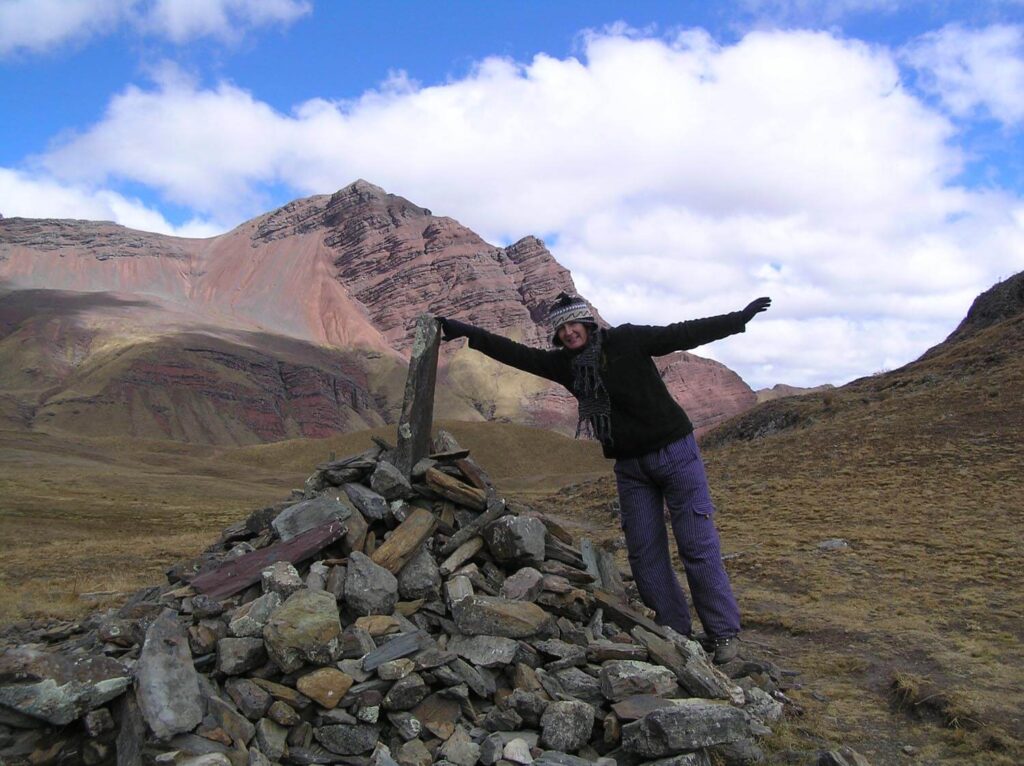
Make no mistake – at 3400m (11,154 ft) in altitude (above sea level), Cusco is among the highest cities on the planet. If you decide to visit Lake Titicaca, Puno is located at a whopping 3,827 m (12,555 ft), and a road trip includes crossing the La Raya pass at 4,313m (14,150 ft).
So any trip to Peru with kids should be carefully planned with consideration. Especially acclimating to altitude and how it might affect you and your kids.
This guide is based on my personal experience living in Cusco for over 10 years and traveling in Peru many times with my three children (we are up to 23 years of experience in Peru & South America at the time of writing). I’m not a medical professional, so this shouldn’t be taken as medical advice. Altitude affects everyone differently, especially kids, so please speak with your doctor or travel health specialist before your trip to make sure you understand what to look for and what’s right for your family.
My ‘take home message’ is allowing time to acclimatize slowly and properly is the best decision you can make for a Peru trip.
This post may contain affiliate links, from which we would earn a small commission, at no extra cost to you. More info in my disclaimer at the bottom of this page.
What is Altitude Sickness?

Altitude sickness occurs when you take in less oxygen than your body is used to at high elevations. It often happens when the body simply doesn’t have time to adjust to the lower oxygen levels. This can lead to symptoms within a few hours of arrival,
Mild altitude sickness is common and usually improves with rest, hydration, and gradual acclimatization. Severe forms are rare but can be dangerous, so learning everything you can about them and pacing your ascent is important, no matter what your age is.
What Are The Symptoms of Altitude Sickness in Kids?

Symptoms of altitude sickness typically develop within hours of arrival at high altitude. They can include:
- Headache
- Nausea
- Shortness of breath
- Inability to exercise/fatigue
You generally feel lethargic and may experience a little dizziness. Insomnia and difficulty sleeping are other common symptoms.

More severe altitude sickness includes an increase in the severity of those symptoms. If they are intense or unbearable, then seek medical assistance. For example, shortness of breath can progress to the point where breathing becomes hard, and when a feeling of tiredness develops into extreme fatigue, we seek help.
You should properly research and seek medical advice before traveling to an altitude, so that you can be fully prepared for what to look out for when at altitude. Also, how acclimating to altitude may affect you.

Good travel insurance is absolutely essential. I recommend checking out this guide on travel insurance, which gives a clear and reliable overview.
Need to get an insurance quote quickly? Try Rise & Shield or Safety wing
Travel insurance is peace of mind, I can guarantee you when you are in a hospital in a foreign country with your child the last thing you want to be worrying about is “how much is this costing me?” or “what about the deposits I paid on that tour.” Having good travel insurance that covers medical, change of plans and cancellations is really vital when travelling with kids. (I personally think its necessary for everyone, but that extra layer of support when you are with children) For a complete understanding of the benefits of travel insurance for Peru, take a look at this detailed guide.
What Age Should I Travel To Peru With Kids (Considering Acclimating To Altitude Issues)?
Altitude Sickness in Babies
The challenge with babies is that they cannot communicate early symptoms, such as headache or nausea.
In infants and very young toddlers, discomfort from altitude may appear as fussiness, feeding less, unusual sleep patterns, or difficulty settling. These signs can overlap with teething or routine changes, which makes it more challenging.
Keep ascents gradual where possible, and give plenty of time to rest at each new altitude. Plan slow travel days, and be aware of the possibility of needing to descend if symptoms worsen.
Altitude Illness in Toddlers

The very valid concern is that toddlers might not be able to articulate how they are feeling, so you can identify it as altitude sickness. For example, one of the milder symptoms of altitude sickness is a headache, along with a general feeling of being unwell. In pre-verbal children, this is going to translate as irritability. Frankly, given that they can often be ‘off’ due to teething or even a change in routine, it will be hard for parents to determine if they are sick from altitude sickness.
We’ve successfully traveled to various altitudes with children under 4, so it is doable, but you need to be well prepared.
Altitude Sickness in Children

Older children generally manage altitude as well as adults. In children above 4, who can better explain what they are feeling, we feel that with a cautious and well-planned approach, you can have a great trip to Peru with kids.
Severe altitude symptoms in children are rare but require immediate attention. Warning signs include confusion, difficulty walking steadily, trouble breathing at rest, or a pale or bluish tint to the skin. If these appear, you should descend and seek medical attention immediately.
How Long Do I Need to Acclimate Properly with Children?

We believe that more than three days are necessary for proper acclimation to altitude if you are going to do a high-altitude trek, and by that we mean four or five days.
Many travel agents and tour operators claim that you can complete the Inca Trail acclimatisation in just 2 days, but we disagree.
If you intend to trek and ascend to 4000m (13,123 ft), then we believe that caution always pays off. We’d acclimatize as long as your itinerary allows, if doing higher treks with children (at least 4 days).
If you are not trekking, then ‘going slow’ for the first 2 days should be enough.
If you’re planning a trek, make sure you read our guides on trekking with kids in Peru and how to trek the Inca Trail with kids.
How to Prepare Kids for Higher Altitude + Tips for Acclimatization from Personal Experience
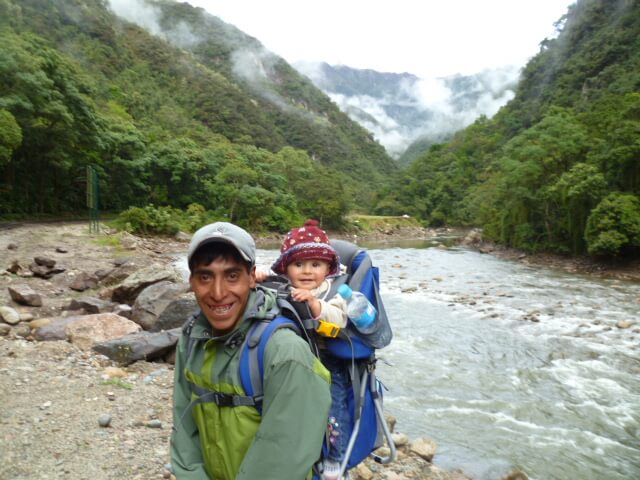
We’ve traveled across the Andes with little ones and learned firsthand how much a few smart choices can make a difference. From choosing the right route and allowing time to rest, to staying hydrated and knowing when to seek help, here are some essential tips we’ve learned about helping kids acclimate comfortably.
1. Acclimatize Slowly

Many people find that ascending gradually (often in increments of around 500m per day) helps their bodies adjust more comfortably.
If you have time, and Arequipa is on your itinerary, it is a great place to start acclimatizing. Personally, we’ve acclimatized here for a few days before flying to Cusco.
For modern-day travel, especially for visits to Cusco and Machu Picchu, we recommend flying into Cusco and then traveling directly to the Sacred Valley via the Pisaq route. The Chinchero route, although faster, passes over a 3,700-meter (12,139-foot) pass.
Make sure you discover our favorite Sacred Valley hotels here
After spending a couple of days at the Sacred Valley, you can choose the next stop on your itinerary – for logistical purposes, we decided on Machu Picchu in our suggested Peru family itinerary. However, other people might head to Cusco, leaving Machu Picchu for the end of their trip.
2. Go Slow And Give Your Body Time (Helps with Preventing Altitude Sickness)
I know very few families who ‘’go slow’ in the days leading up to a holiday departure. By nature, they tend to be rushed and frantic days. Then, we hop on flights and place our bodies under other types of stress before arriving in a foreign country and launching into a busy itinerary.
In general, we recommend ALL travelers take it easy for the first few days, but ESPECIALLY if you have children and especially if you are acclimating to altitude.
By this, we mean having a few activities planned and a conscious effort to get to bed early and get plenty of rest. It is tempting to want to “do everything,” but we believe that a focus on rest helps with acclimatization. In short, don’t over-exert yourself during the first few days at altitude! Leave time to adjust and plan a rest day!

Not sure how to acclimatise properly? Then why not contact a reputable travel agency like Apus Peru? They have 20 years of experience in organizing trips, helping people to acclimatise, and can give you some innovative ideas. Plus, if you were to suffer from altitude sickness, it’s nice to work with a trustworthy company that will help you get to the doctors and make sure you are not alone in a foreign country. Discover Apus Peru here >>>
A special note for long-haul travelers:
We are Australians, and for us to travel to Lima often involves flying for over 30 hours. Without fail, when we arrive in Lima, we are both physically and mentally exhausted. When the kids were young, jet lag and adapting to the new time zones were particularly challenging.
To help our bodies recover and be strong before hitting altitude, we spent up to a week on the Southern Peruvian Coast.
We highly recommend spending a few days in cosmopolitan Lima, if possible – see our post ‘Things To Do In Lima For Kids’ here and our post ‘Places To Stay In Lima with Kids’ here.
Read our South America Travel Tips guide for more information on traveling in South America.
3. Carry Oxygen to Help Treat Altitude Sickness
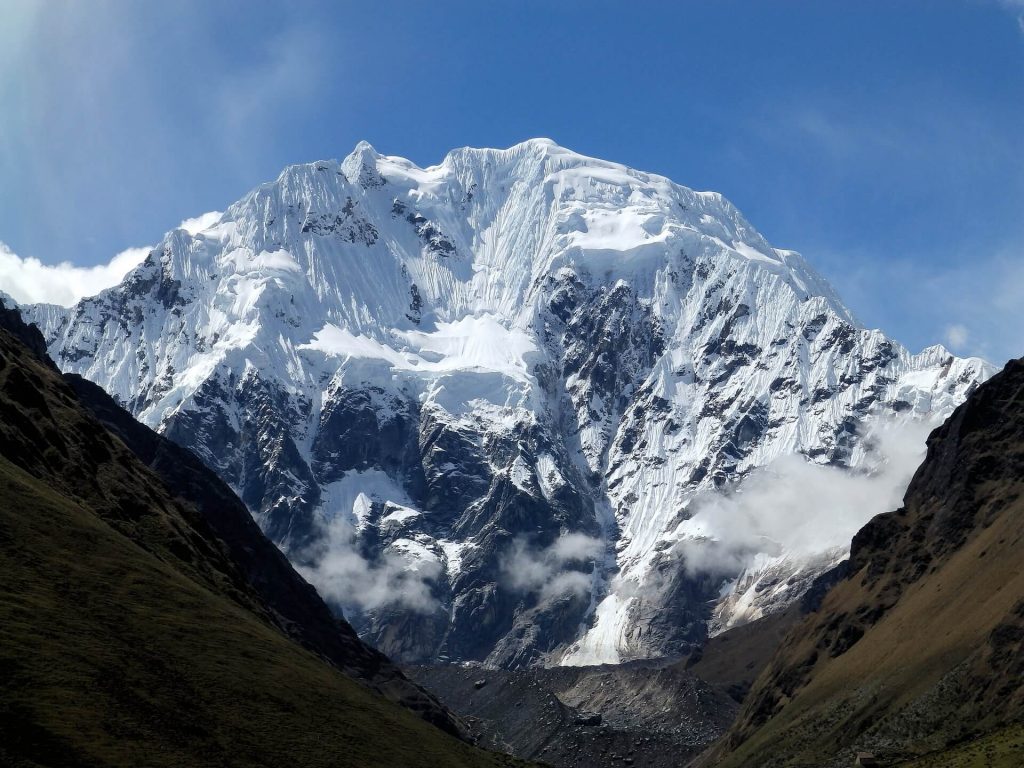
Reputable travel companies should always have an oxygen bottle in their vehicles. If you are traveling independently, you can buy “XiShot’ disposable oxygen cartridges.
Oxygen is not a cure for altitude sickness, but it can temporarily ease symptoms like headaches, breathlessness, and the heavy, sluggish feeling that sometimes appears in the first day or two at higher altitudes.
You will also see small disposable oxygen canisters sold in pharmacies and outdoor shops in Cusco and the Sacred Valley. These are lightweight and easy to pack in a day bag. They deliver less oxygen than a medical tank, but they can provide short-term relief at low Oxygen levels if you or one of your travel companions is uncomfortable while you rest and reassess.
It’s important to remember that oxygen is a supportive measure only. If symptoms worsen, the best course of action is to stop ascending and, if necessary, descend to a lower altitude and seek medical help.
4. Hydrate, Hydrate, Hydrate

Consuming a lot of fluid can help alleviate the symptoms of altitude sickness. Water is the best option. We always try to minimize our impact on travel, so we recommend carrying an eco-conscious water bottle and refilling it at your hotel.
Coca tea also helps tremendously and is an age-old remedy in Peru. Coca is not the same thing as cocaine, and we’ve given our children coca tea to drink – but this is, of course, a personal choice.
(Not applicable for children, but if you drink alcohol or coffee, you will hinder the acclimatization process.)
The effects of alcohol are felt faster at high altitudes due to lower oxygen levels and quicker dehydration.
5. Altitude Sickness Medicine
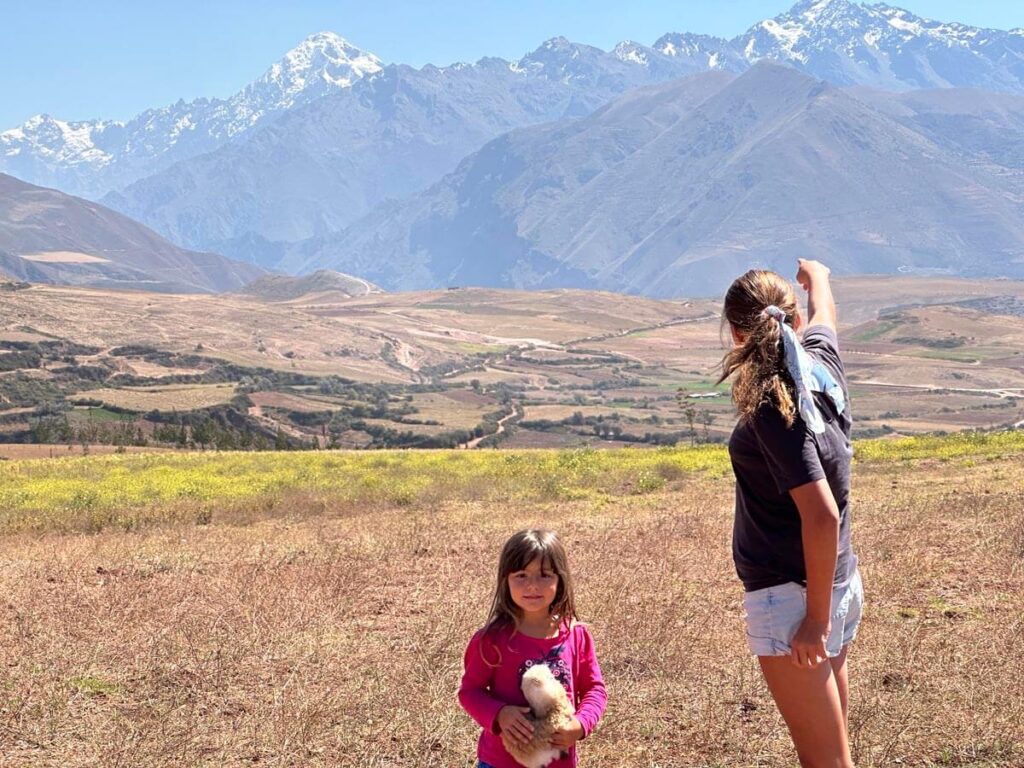
We have never taken Diamox (or Acetazolamide) during any of our trips to Peru, or pre-kids trips in the Himalayas and Tibet. However, that doesn’t mean it might not be an option for your family.
We understand from many people that it most definitely helps with acclimatization. However, arguably, people don’t know if they would have suffered symptoms, as the tablets mask them.
Some medical studies indicate that Ginkgo Biloba may help ease symptoms of altitude sickness. You might want to investigate this further and see if it is right for your family.
If you are interested, definitely consult with your travel doctor about the pros and cons of taking any medication.
6. Medical Conditions
Conditions that affect the heart and lungs (e.g., lung disease or poor circulation) can make it harder for the body to adapt to lower oxygen levels. Make sure you seek advice before your trip.
This doesn’t mean you can’t visit Peru (unless advised otherwise), but it does mean you should get personalised advice on how to approach the trip safely.
When to Seek Care and Medical Help
Most families experience only mild altitude symptoms, which usually subside with rest, adequate hydration, and gradual acclimatization. But it is important to know when symptoms are no longer just part of normal acclimatization. If symptoms are worsening rather than improving, or if a child who seemed “a bit off” suddenly becomes very tired or distressed, it is time to pause your plans and reassess.
I CAN’T tell you when you should personally seek care or medical help, but it’s better to be safe than sorry. I’m not trying to scare you, I’m just making you aware. Severe altitude sickness can lead to life-threatening conditions such as High altitude pulmonary edema (HAPE) and high altitude cerebral edema (HACE). If in doubt, get medical attention as soon as possible!
Planning Your Trip to Peru with Kids

How to plan a Peru vacation (US) – How to plan a Peru family holiday (UK/Aus)
2 week Peru itinerary for families
What to Pack for a Peru family holiday
The best Peruvian children’s books
If you’d like some guidance choosing the right order of destinations or planning a gentle acclimatization plan, Apus Peru is a great local operator to talk to. They specialize in thoughtful, small-group travel and can help you build an itinerary that works well for kids and altitude – Get in touch here
FAQ: Altitude for Kids
Altitude illness usually develops in three stages. The first is acute mountain sickness, which often starts with a headache, nausea, and tiredness. The second and third stages, high altitude pulmonary edema and high altitude cerebral edema, are severe and need medical help straight away. Most people only ever see the first stage, and it usually improves with rest, fluids, and time at the same or a lower altitude.
Yes, it is. Acute mountain sickness, or AMS, is the mildest and most common form of altitude sickness in both kids and adults. It often appears within the first day of arriving at a higher elevation and feels a bit like jet lag, with headaches and poor sleep.
Mild symptoms usually ease within one to three days as children acclimatize, especially if you rest and keep them hydrated. However, every child is different. If symptoms worsen after a day or two, or if there’s vomiting, confusion, or shortness of breath, it’s time to seek medical attention.
Like It>> Pin It>> Tips For Acclimating To Altitude With Kids


These are such great tips – we’ve not done heights with our little but has helped me understand the potential #fearlessfamtrav
it is certainly something that parents need to think through!
These are such fantastic tips. Slow is definitely the way to go. The boys got up to 3200m when we did Poon Hill in Nepal and we added on an extra day to what most do to get up there – they were absolutely fine! Remarkably they seemed to have a ridiculous amount of energy at the summit! However, any higher at their age and I would have concern as, as you say, they can’t articulate it well – is the whinging because they’re a toddler or because of altitude?
Thanks so much for linking up to #fearlessfamtrav
It makes me laugh every time I say/ think it… is it altitude sickness or is it your toddler being “normal”!
Such great tips here, especially about acclimatizing over several days. When I was in my 20s the altitude didn’t bother me. When I went to Quito in my 40s I really noticed it. Love the recs you offered on oxygen and medications. I wouldn’t know where to start!
Yes that is the idea, giving parents a place to start if they are considering a trip to altitude.
Great tips. I agree it is important to acclimate, go slow and hydrate when changing altitudes (at any age).
Yes the principles are the same whatever the age, but parents are generally pretty concerned about it.
Fascinating tips! The idea to carry an oxygen bottle is so interesting. It never occurred to me before, but I can see now that it sure could be important!
Mostly for peace of mind, but can be useful if you are feeling poorly!
I never knew you could bring your own personal oxygen. That would totally come in handy for altitude sickness. The advice to take a couple days to acclimate and drink lots of water are both ways we’ve used to fight it. Thanks for the addintional info!
[…] Want more advice? Check out our Tips For Acclimating To Altitude With Kids. […]
[…] Tips For Acclimating To Altitude With Kids […]
[…] For more information about how to deal with altitude, check out our post Tips For Alccimating To Altitude With Kids. […]
[…] The main health consideration or concern with the Cusco and Machu Picchu region is acclimatization. We have had a lot of experience with this. Read here for our “Tips For Acclimatizing To Altitude With Kids”. […]
[…] The main health consideration or concern with the Cusco and Machu Picchu region is acclimatization. We have had a lot of experience with this. Read here for our “Tips For Acclimatizing To Altitude With Kids”. […]
[…] more information please read our Tips For Acclimating To Altitude With Kids and Best Things to do in the Sacred Valley Peru With […]
[…] backtrack over the same ground but you still need to allow 4 days. Make sure you are well acclimatized to altitude before […]
[…] There are many considerations and planning that need to be done in order to do this safely. Tips For Acclimating To Altitude With Kids is a great resource for parents of kiddos wondering how this is best […]
[…] Tips for Acclimating to Altitude with Kids […]
This is very helpful – thank you for sharing. We have a 1 and 6 year old and we play to fly from Lima to Cusco and straight on to Ollantaytambo for 1 night followed by 2 nights in Aguas Calientes. Having read your post though I am concerned we might be rushing? Any further insights would be great. Thanks.
Hi Rose, thanks for your message. Acclimatisation wise, Ollantaytambo is the lowest town in the Sacred Valley, and Aguas Calientes is lower again, so you should be ok in that respect, if you are then going to head up to Cusco for a few nights. However, when travelling with kids my children don’t cope well with just 1 night in a hotel, ever. They seem to need more time to get into a little routine and know the place or it results in tantrums and the like. (It all depends on your children of course) Its just a lot for their little bodies and minds to cope with, so slower travel and plenty of down time (ie, in pools or gardens) is good for my kids. I’m working on an itinerary for a family at the moment and I have them 4 days in the Sacred Valley, 2 nights at Aguas Calientes, and then 4 nights in Cusco. I realise you might not have that luxury of time, but if you are able to spend multiple nights the kids would likely be better adjusted. hope that helps.