

Last Updated on October 13, 2023 by Ariana Svenson
Sloths have hit the big time in popular culture. Everywhere you look there are sloths and more sloths. On social media, and in toy stores. In fact, if you have kids there is a good chance you’ve bought a toy sloth in recent years – which is why we’ve added in some of our fave sloth gifts for kids at the end of the post. However, we didn’t know a lot of fun sloth facts for kids before doing our research. So maybe that is why you are here too, to learn all the most interesting facts about sloths.
This post may contain affiliate links, from which we would earn a small commission, at no extra cost to you. More info in my disclaimer.
Fun Facts about Sloths – My Own Sloth Experiences
A friend was recently raving about a sloth fabric she wanted to buy for her 5-year-old the other day and while I was thinking she was being a bit over the top, my mum piped up and said, ‘You remember those sloths we saw in South America”! We could – with some reminiscing – recall seeing sloths a couple of times. But – it was such a bland experience – that it was hardly a highlight of our travels. The point my mum was making was – why such a massive interest in sloths when to see the actual animal it’s definitely underwhelming and could even be called boring!

Interest Sloth Facts for Kids
Even though my experience with sloths wasn’t exactly memorable, sloths are interesting creatures. So to satisfy your curiosity (and add to the sloth hype) here are some interesting facts about sloths for kids.
When did Sloths Become so Popular?
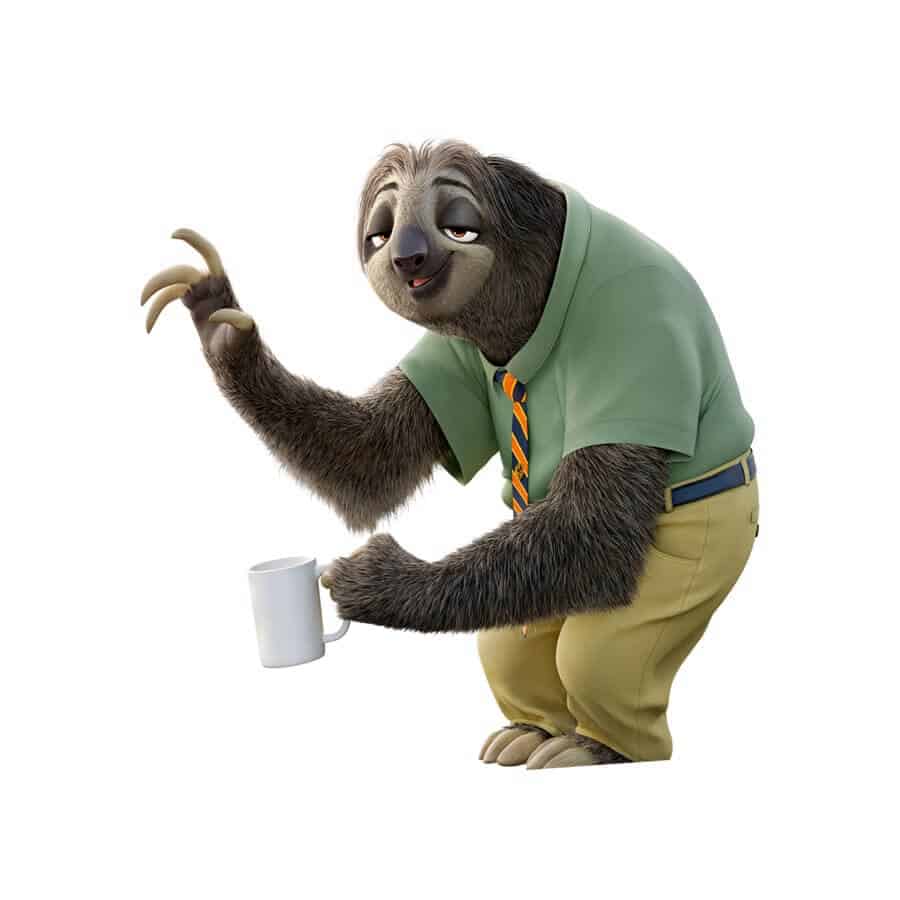
Well, that is a good question and one that might not have a direct answer. Many children (and adults) were introduced to sloths in Disney’s movies Zootopia and Ice Age both featured lovable and quirky sloth creatures. Over the years there has been a steady increase in society’s fascination with these tree dwelling mammals. The sloth’s popularity nowadays seems to be right up there with the always fascinating unicorn and the lovable llama. Speaking of the llama, check out our Fun Alpaca And Llama Facts For Kids.
What Kind of Animal is a Sloth Exactly?
Sloths are a group of mammals that live mostly in trees. We call these types of animals arboreal animals. Arboreal meaning an animal that spends most of its life in a tree.
Other arboreal mammals include the orangutang, monkeys, some squirrels, and lemurs. Now that is a fun fact about sloths that you can quiz your friends on.

What do Sloths Represent in Popular Culture Today?
Sloths are the ultimate chill animal. It used to be that calling someone a sloth was saying they were slow and lazy. However, now it seems the sloth embodies the ultimate laid-back, no worries, attitude. In such a fast-paced world that we live the sloth represents a relax and take it easy kind of vibe!
Plus, many people think the sloth is so incredibly cute! But we aren’t convinced? Let us know below some more sloth facts for kids and if you think sloths are cute or not.
Why do Sloths Move so Slow?
One of the interesting facts about sloths is that they do move slow and for good reason. For a sloth, moving slowly is part of its survival. They have an extremely slow metabolic rate. This is the rate that their stomach breaks down food. Because of this they also don’t require eating huge quantities of food. The slow movements mean less energy expended and less food they have to eat. One of the main sloth facts for kids is that the sloth is the slowest animal on earth.
However, moving slowly is not JUST about food. As we said, it is about survival. Because the sloth moves so slowly it can not quickly escape predators like jaguars and ocelots. So the sloth depends on blending in. One of the interesting facts about sloths is that it actually grows algae on their fur to blend in with the environment. A sort of algae camouflage! Since predators like the jaguar depend on their sight to hunt prey, the slow-moving, camouflaged sloth doesn’t attract too much attention to itself. Moving at a slow, measured pace is on purpose and has worked out well for the sloth.


Exactly How Much do Sloths Sleep?
A lot! Exactly how much is debated. Some say the sloth sleeps up to 20 hours a day. However, new research suggests that it is maybe more like 8-10 hours a day in the wild. Sloths love to sleep hanging upside down from a tree branch or curled into a ball. We have to admit they do look rather cute sleeping.
As we learned in our facts about sloths for kids above, their sleeping so much is to conserve energy. It has nothing to do with them being lazy little creatures.
How Much Does a Sloth Weigh?
This all depends on the species of sloth. A smaller species can weigh as little as 8 (or 3.6 kilograms) pounds and a large species, like the Maned Sloth, as much as 22 pounds (about 10 kilos).

What do Sloths Eat?
As we might have guessed from our above sloth facts for kids, not much. As mentioned before, they have an extremely slow metabolic rate. They can survive on a relatively small amount of food. However, when they do eat they munch on tree leaves, twigs, and buds. Another fun facts about sloths are that they do not have incisor teeth. They actually “tear” the leaves by smacking them down on their lips.
Pooping for a Sloth is a Major Event
One of the strangest sloth facts for kids (and maybe the grossest) is that pooping is a terrifying ordeal for a sloth. It is such a major event that a sloth only poops, on average, once a week. Can you imagine? However, because the sloth is so slow and spends the majority of its life in trees coming down to go number 2 can be terrifying. The sloth completely defenseless on the ground. It cannot move fast enough to escape predators but it must come down to do its doo-ty. Not only that but a sloth loses up to a third of its body weight in a single dump. I guess that is what happens when you only go once a week?
So why does the sloth just not poop from the tree? Good question! One of the most interesting facts about sloths is their symbiotic relationship with the algae that covers their body. How does this relate to them pooping you wonder? Well, the sloth will climb down from its tree to poop so that moths can lay eggs on their poo. These moths in turn land on the sloth depositing their camouflage algae covering on their fur. This has to be some of the most bizarre sloth information for kids!

How Many Species of Sloths are There? There are Both Three Toed Sloths AND Two Toed Sloths
In total, there are six different species of sloths. One of the cutest fun facts about sloths for kids is how the species differ.
One of the super interesting facts about sloths is that, before the ice age, there use to actually be ground sloths the size of elephants. WHOA! However, they died out in a mass extinction event just like the dinosaurs.
List of Two Toed Sloth Species
The two-toed or two-fingered sloth is a species of sloth that has two claws on their hands. Even though they’re mostly called two-toed, their feet actually have three toes!
There are two species of two toed sloth alive today:
- Linnaeus’s two toed sloth (Choloepus didactylus)
- Hoffman’s two toed sloth (Choloepus hoffmanni)
List of Three Toed Sloth Species
The three-toed sloth has three claws both on its hands and feet. It is the most well-known kind of sloth. There are four existing species of three toed sloth alive today:
Pygmy three-toed sloth (Bradypus pygmaeus) – also known as the monk sloth or dwarf sloth.
- Maned three-toed sloth (Bradypus torquatus)
- Pale-throated three-toed sloth (Bradypus tridactylus) – also known as the ai.
- Brown-throated three-toed sloth (Bradypus variegatus)

Baby Sloth Facts for Kids
Who doesn’t like a baby animal? Baby sloths are no different, they are so darn cute and tiny! A baby sloth only weighs about 10 ounces when it is born. Perhaps incredibly though, the baby sloths are born with their fur. Also, their eyes are open and they know how to climb. But they stick around with mama for up to two years before they venture out on their own.
Are Sloths Endangered? Why?
Unfortunately, yes. The Maned Sloth and the Pygmy Sloth are both considered endangered. These two species have only ever existed in a small geographic area and urbanization and deforestation have both taken a toll on these habitats. Sloths are prone to electrocution from climbing on power lines, animal attacks (such as domesticated dogs), and poaching.
The Pygmy Sloth is only found on a remote island off the coast of Panama and is one of the most critically endangered mammals in the world. One of the true facts about the sloth is that they are excellent swimmers, especially the Pygmy Sloth!
To learn more about these endangered species, check out the Sloth Conservation Website.
Where Can I See Sloths? The Jungles of Central and South America
Sloths live in the jungles of Central and South America. Depending on the species, they can be seen from Costa Rica down into parts of Brazil and Peru.
Yes, that’s right, you can see sloths in Peru! If you have been following us here at World Of Travels With Kids, you know that Peru is very special to us. We also consider ourselves knowledgeable on all things Peru travel. Here are our Peru Facts For Kids, and also our Full Guide To Peru With Kids.

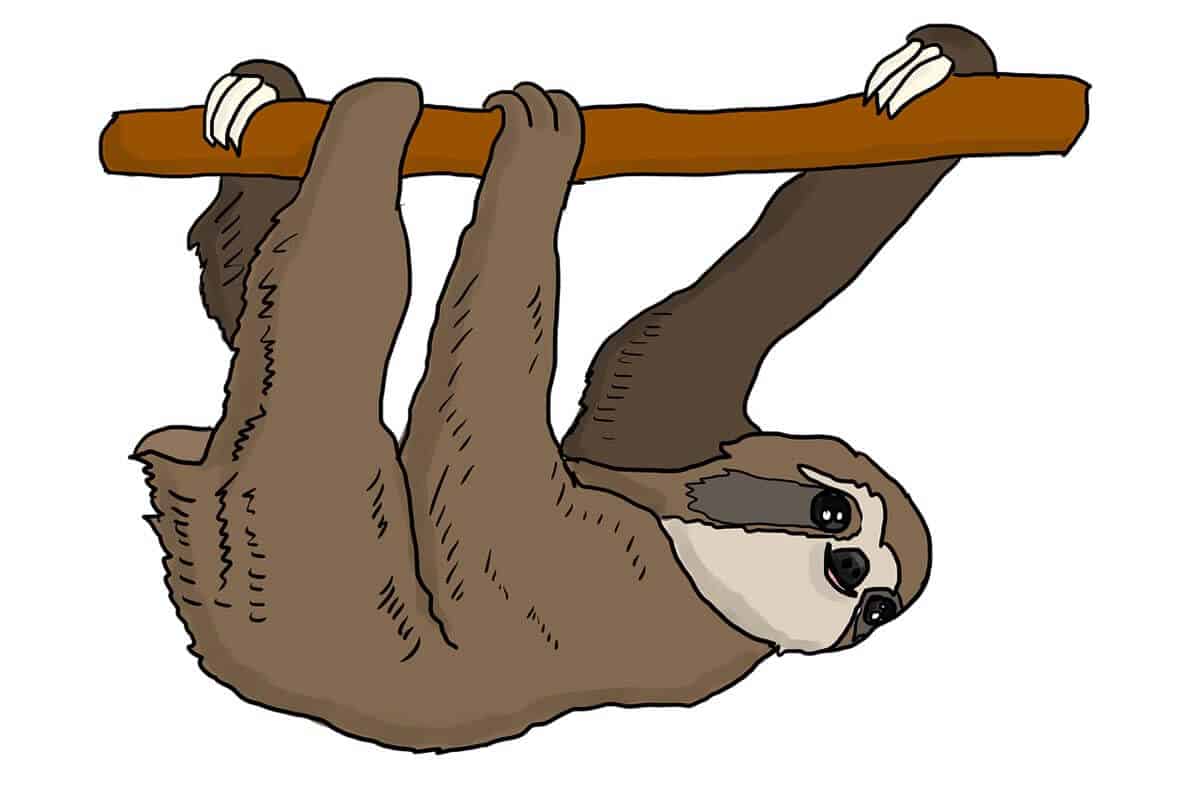
Sloths Like to Hang Upside Down
Weird facts about sloths include, most famously, how they love to hang upside down! We love everything about sloths, but how they cling to a branch is iconic. There are a few reasons for this, but, like many facts about sloths in the rainforest, it comes down to food.
The newer, greener leaves on the end of branches carry fewer toxins than others and are much easier for the sloth to digest. Hanging upside down is the easiest way to reach these leaves.
Sloths sleep upside down too! While they hang horizontally, they sleep vertically – with only two of their limbs hanging onto the branch! It’s easier for their lungs to breathe in this position.
Gravity isn’t a problem for sloths, thanks to some sloth claws facts. Their claws have sticky fibres and claws-like coat hangers that allow them to stay upside down for almost the whole of every day! Hanging upside down helps sloths to conserve the energy they need.
Once Upon a Time, There Were Giant Ground Sloths… But Humans Drove Them to Extinction
The giant ground sloth, called the Megatherium or a megathere, lived in parts of South America, including Bolivia and the Pampas. It was one of many large kinds of sloth that used to live in the world, but it was the biggest of them all. From nose to tail, they could reach about 20ft on average!
Giant ground sloth facts include that they were bigger than most other ‘megafauna’ that existed at the time. Giant ground sloths went extinct around 12,000 years ago, and there were probably two reasons for this. First, it was a time known as the Quarternary Extinction Event, which killed off many of the area’s huge mammals.
As well as that, though, evidence shows that humans hunted the giant ground sloths for food and sport when they settled in the Americas at around the same time – so hunting probably sped up their extinction.
Three-toed Sloths are Herbivores
Sloths are descended from large creatures who exclusively ate the leaves on trees, and modern sloths are largely herbivorous too. The three-toed sloth has a very limited diet and only eats certain types of leaves from very few kinds of trees and nothing else.
This is why rainforest protection is so important to their survival. Since they need to eat and sleep to preserve energy constantly, it can take months for them to digest food, and two-thirds of their weight is made up of food.
Two-toed sloths, though, have a slightly different diet. They are omnivores, meaning they can eat plants and animals like humans. They eat insects, fruits, leaves, dead animal meat, and even lizards!

Colour is Something That Sloths Cannot See
Another of our favourite unbelievable facts about sloths is that all sloths are colour-blind! Also, when it’s bright outside, they’re completely blind and can’t see at all.
Their eyes work only when it’s dark, but even then, their vision is poor, and they can’t see colour. Back in their evolution, there wasn’t much light, so their ancestors evolved to sacrifice colour cones in favour of focus.
Another fun piece of sloth info is that armadillos are very close relatives. They descended from the same ancestors. As a result, neither armadillos nor sloths can see well at all, nor can any of their relatives. Bonus fact: contrary to popular belief, dogs – unlike sloths – DON’T see the world in black and white!
Swimming is a Favorite Sloth Activity
Everything about sloths is focused on their low movement levels, but did you know that they actually love to swim? It’s true! Both the two-toed and three-toed sloth are amazing swimmers, and they can even hold their breath for up to 40 mins underwater thanks to their slow heart rate!
Sloths might be very slow on land, but not so in the water. In fact, a sloth can move three times as fast when swimming as it can when trying to move on land – up to 0.5 miles per hour. Their strong, long arms help propel them through the water. Sloths swim so often because it’s actually easier for them to move between areas through water than it is by land.
Algae Can Grow on Sloth Fur
This piece of sloth information might seem a little gross! Because sloths move so slowly and hang in the same place for so long, their fur is a natural resting place and growth point for all sorts of organisms. In fact, each sloth has an entire micro-ecosystem in its fur! Their hair is filled with something called ‘microcracks’ that act as a great home for fungi.
In fact, the algae and fungi that grow in sloth fur are so unique that they can’t be found anywhere else in the world. They’re useful, too: scientists are currently researching their use for several medical purposes!

Sloths are Completely Blind in Bright Light
Sloth eyesight is poor at all times, but in bright light, they aren’t capable of seeing at all. Even though sloths will turn their heads toward sounds, they can be looking directly at something and not see it!
Sloths Have Very Large Stomachs, Which can be Up to 30% of Their Body Mass
Sloths have very strange internal organs! When it comes to sloth food and sloth poop, the facts are all interesting. Sloths have a bizarrely slow digestive system, and it can take close to two months for them to digest a single meal. Because of this, they carry a lot of their food around with them at all times, meaning that their stomachs can take up most of their weight!
Sloths only poop once a week or so, so at any given time, they’re carrying around the equivalent of a week’s worth of bathroom breaks. Their massive stomach is so big that it has four chambers like a cow’s! Even more bizarre, the two-toed sloth has 46 ribs to protect its huge tummy – more ribs than any other mammal.
Sloths Cannot Raise Their Own Body Temperature
Because sloths mainly focus all of their processes on preserving energy gained from their limited diet, evolution stripped them of the ability to control the temperature of their bodies. This means that they are entirely at the mercy of the elements. While humans have a steady core temperature (unless we’re sick!), sloths don’t – their core temperature can vary by nearly 20F in a single day!
It’s very important that they don’t get too cold. This means they do their best to choose resting places with the right temperature to help them thrive.
Sloth Gifts for Kids
With Sloths being so popular and interesting, it is only natural that you have to have some really cool sloth gifts for kids. Not only do these all make really great sloth fits for kids, but I suspect many adults would love them too! Below are some of our favourites. Click on each one to see current prices.
  |   |   |
  |   |   |
The Verdict – Sloth Facts for Kids
We hope you have enjoyed our sloth facts for kids. Who knew there were so many interesting facts about sloths for kids? I bet now that you know way more about sloths pooping habits than you ever wanted to! You have to admit though, they are pretty amazing animals who have taken a unique approach to survival. Do you have any other fun facts about sloths you’d like to share with us? Let us know below
Check Out Our Other Animals Facts Posts
Interesting Facts For Kids About Koalas
Fascinating Australian Cassowary Facts for Kids
Fun Facts About Alpacas for Kids and Curious Adults
Fun Llama Facts for Kids and Inquisitive Adults
VERY Interesting Sloth Facts For Kids – Learning Made FUN!
Like It> Pin It> Sloth Facts For Kids





Add comment