

Last Updated on October 19, 2023 by Ariana Svenson
Looking for fun facts about Capybara? Since Capybaras are the largest rodent in the world, these Capybara facts make them some interesting creatures.
Their scientific name, Hydrochoerus hydrochaeris, means water hog in Greek. And while they do like the water and are excellent swimmers, we think they look more like a giant guinea pig or rat than a hog.
My son has a current love for Capybaras, and after reading these Capybara fun facts, we hope you will too!
This post may contain affiliate links, from which we would earn a small commission, at no extra cost to you. More info in my disclaimer.

My Son is Obsessed with Capybara
Don’t ask me why, I have no idea – but somehow, during the last 12 months, my son got obsessed with everything about Capybaras.
We literally could NOT believe that there are not one but TWO places that offer Capybara encounters in Queensland! Currumbin Wildlife Park and Wildlife HQ at the Big Pineapple. The Currumbin Wildlife Park’s encounters were all filled up for January, but we got a spot at Wildlife HQ just two days ahead. You know those moments when you pinch yourself and can’t help smiling – this was one of those moments.
Then later in the same year we travelled to the Amazon jungle in Peru, and saw loads of Capybaras chilling on the edge of the river; you can read about our experience in the The Amazon jungle in Peru.
We will ALL remember it for the rest of our lives! We are delighted to share these fun facts about Capybaras with you!

Fun Facts About Capybara
These are the basic Capybara facts that are interesting to know. Things like what is a Capybara? Once you learn the basic Capybara information, our hope is that you will be intrigued to continue reading on.
1. What is a Capybara?
Yes, they are cute but what exactly is a Capybara? The Capybara is, quite literally, a giant rodent. In fact, it is the world’s largest rodent.
The Capybara’s closest relatives are Guinea Pigs and Rock Cavies. And maybe you could tell from how they look, but they are also distant relatives of Chinchillas and Nutrias.
Capybaras have large barrel-shaped torsos and square heads. Their facial features are all on the top part of their head which helps them to see and breathe while in the water. They have semi-webbed feet for swimming and large claws that help them traverse the slippery rainforest floors.

2. What is the Capybara Most Known For?
One of the most fun facts about Capybara is that they are known for is holding the title of the world’s largest rodent.
Their strong, barrel-shaped bodies and calm attitude are often referred to as “nature’s ottoman” because many animals, from birds to monkeys, sometimes perch or rest on them.
Another thing Capybaras are known for is swimming. Their legs might be short, but they’re skilled swimmers, often seen lounging in water to escape predators and heat. This tendency to be near water is so pronounced that their scientific name, “Hydrochoerus hydrochaeris,” translates to “water hog.”.
The third thing Capybaras are known for is their gentle nature. Despite their size, capybaras are sociable, peaceful creatures, often seen mingling harmoniously with various other animals.
3. Where do Capybaras Live?
Capybaras are native to South America. They are most abundantly found in the Pantanal of Brazil in the Amazon Jungle and the grasslands of Columbia and Venezuela.
In fact, they are found everywhere in South America except for Chile; even in our favorite country Peru. Speaking of the Amazon, 30 Amazing Facts About the Amazon Rainforest for Kids will give you a good idea of the Capybara’s habitat.
However, one of the more unknown Capybara facts is that there is a small population in North Central Florida in the United States. It was believed they were accidentally released in Florida some time ago. However, they went largely undetected until one was hit by a car on the highway, prompting biologists to look into how that could happen.
Since they are not native to Florida, they are considered an invasive species.

4. Capybaras Belong to the Cavy Family. Just Like Guinea Pigs
Capybaras are part of a special family of animals called the cavy family. In scientific terms, this family is known as “Caviidae”. The biggest member of this family is the capybara.
Other animals in the cavy family are much smaller, like guinea pigs.
5. Capybaras Are Extremely Social Creatures
They are typically found living in communities of 10-20 animals. But one of the Capybara fun facts is that during the dry season, they can be observed living in communities of upwards of 100 capybaras gathered around various water sources.
The males establish dominance and a social hierarchy while forming social bonds within the group. Usually, there is not just one dominant male, but a few in a large group of Capybaras. They communicate by making barking-like noises and marking their territory with their scent.

6. They are Also Highly Intelligent
One of the interesting facts about the Capybaras is that they are highly intelligent. They are considered at least as clever as some of the most intelligent dog breeds.
They also feel very complex feelings and emotions. Because they are very social creatures, being alone for long periods can send them into a depression.
7. What do Capybaras Eat?
So, what do Capybaras eat, you ask? These giant rodents are herbivores and eat various plant materials depending on the season.
They eat a diet consisting of grasses, tubers, sugar cane, and aquatic plants.

8. Are Capybaras Endangered?
No, Capybaras are not endangered, but they are a threatened species.
It is estimated that there are upwards of a half million Capybaras in the Brazilian Pantanal alone. They are on the least concern list as far as endangered animals go.

9. How Long do Capybaras Live?
Wild Capybaras live, on average, about 8-10 years. However, Capybaras in captivity can live longer. This is because they usually are well taken care of and live free from their natural predators.
10. Is it easy to see Capybaras in the wild?
Yes! We recently saw Capybaras during our trip to the Amazon jungle of Peru; you can read more about our experiences at The Amazon with Kids; A Refugio Amazonas Review
You can also see a lot of capybaras if you visit the Llanos (Plains or Grasslands) of Colombia on a wildlife safari to the Llanos.
Actually, the Colombians call the capybara a “Chiguiro” and I’ve heard that they are so common in the grasslands that during the pandemic “social distancing” signs said to make sure you stay 2 chiguiros away from others. I bet you never heard of that before!
11. Can Capybaras Sleep Underwater?
Capybaras are semi-aquatic mammals. They DO have the ability to sleep underwater. Only their noses peek out when resting in water, allowing them to breathe while remaining largely submerged.
This unique feature offers safety from potential predators. While they don’t sleep fully submerged, capybaras can take brief, relaxed naps with just their nostrils above the waterline.
The next time you spot a capybara near water, remember they might just be taking a sneaky nap, with only their noses giving them away!

More Interesting Facts about the Capybara
Here are some more interesting facts about the Capybara. This rodent of unusual size has quite a lot of quirks and interesting things to know about them.
Even though they may look like a hairy pig, they are fast and incredible swimmers.
12. Capybara Fun Facts for Kids: Why are Capybaras So Chill?
Capybaras have earned a reputation for being the zen masters of the animal kingdom. The main reason is that capybaras often live in regions where a calm approach helps survival. Sudden, quick movements or aggressive behaviour can attract unwanted attention from predators. Staying low-key and blending into their surroundings has always been to their advantage.
Another reason is that capybaras live in social groups, and harmonious coexistence is very important. Their social structures demand mutual grooming, vocal communications, and group activities.
Lastly, their diet of grasses and aquatic plants requires patience and time. Feeding sessions are long and unhurried.

13. How Big Can a Capybara Get? Hint: Male and Female Capybaras are Different
The capybara holds a unique title – it’s the world’s largest rodents. Capybaras are very recognizable with their large heads and sturdy bodies.
An adult capybara can measure impressive lengths, sometimes even surpassing (128 CM) 4.2 feet from nose to the base of their tail. Their strong hind legs support this bulk, which aids in walking and swimming.
Most rodents, like mice or squirrels, are only a tiny fraction of a capybara’s size. The biggest capybara can weigh as much as 174 pounds (79 kg). Interestingly, female capybaras tend to be slightly larger than their male counterparts.
But they don’t start this big. Capybara young, or pups, are much smaller and are nurtured by their mothers until they can fend for themselves. These pups undergo a big transformation as they grow, eventually out-sizing all other rodent relatives.
14. How Fast Can a Capybara Run?
One interesting piece of Capybara information is how fast a Capybara can run.
You might not have guessed by looking at them, but they are quite agile and fast. Capybaras can run up to 35 kilometres an hour, as fast as a horse!

15. Capybaras are Great Swimmers
Yes, Capybaras are excellent swimmers. They like the water so much they are considered a semiaquatic mammal.
One of the fun facts about Capybaras is that they can stay underwater for up to 5 minutes at a time! T hey even sometimes sleep in the water. Isn’t that amazing?

16. Capybaras Teeth Replace Themselves Through Their Lifetime
A unique and captivating fact about capybaras is their ever-growing teeth. Unlike humans, who get one set of permanent teeth, capybaras possess teeth that continually grow throughout their lifetime.
This feature is essential for these herbivores as they constantly graze on various plants, which could wear down their teeth over time. Their incisors, particularly sharp and chisel-like, keep growing to compensate for the wear and tear.
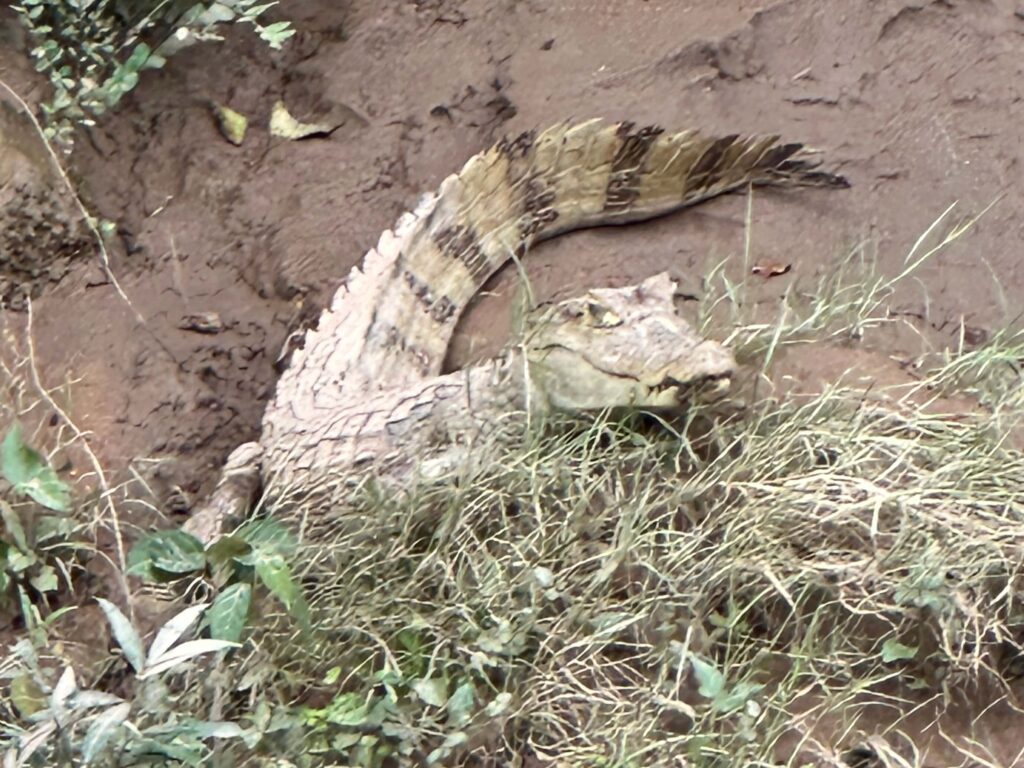
17. What are the Capybara’s Main Predators?
While the Capybara likes to spend most of its time lounging in the water on a hot day or eating by shallow water at the river’s edge, this can present a problem. The main natural predators of the Capybara are Jaguars, Caiman Crocodiles, Green Anacondas, and Harpy Eagles.
Of course, you can list humans on the list as well. Capybaras are hunted for their meat and pelts. They are also killed because they are considered pests in some regions.
Some farmers see their grazing habits as competition for their livestock, unfortunately.
18. Can You Have a Capybara as a Pet?’
Generally speaking, the answer is yes. They are well-mannered, social, and happily co-exist with other species. If you raise them from birth, they are easily tamed and do not attack unless threatened.
However, they require vast land for grazing and a large pool or bodies of water for swimming and bathing. Also, remember that because they are social animals, they do best when living in groups.
While they can live solitary lives in the wild, that is not the norm. Ideally, they would live with more Capybaras and other animals to keep them company. Just ensure there are not too many male Capybaras in the group, or this could lead to territorial fighting during the breeding season and at other times.
Of course, we are not advocating people keep Capybaras as pets. Plus, many cities and municipalities restrict what type of animals you can have as pets.

19. Do People Eat Capybaras?
As we learned earlier, Capybaras are native to South America, where their meat is considered a delicacy. There, they are eaten in pretty much every country except for Chile.
So, what does a Capybara taste like, you might wonder? Well, because they eat a lot of water plants, many people say they taste more like fish than meat.
There are a lot of Capybara facts, but would you believe that one of the Capybara fun facts involves the Vatican? Salt-cured Capybara is so popular during Lent in Venezuela that the Vatican declared it fish, not meat. Would you try Capybara meat?
20. Capybaras Need Water to Keep Their Dry Skin Moist
As semi-aquatic animals, capybaras thrive in and around water. This semi-aquatic lifestyle is deeply rooted in their natural habitats, such as the Amazon River regions. You can read more facts about the Amazon River here.
Water doesn’t only offer them a place of refuge but is essential for maintaining the health of their skin. Unlike many animals with oil-secreting glands, capybaras have dry skin, which means they need regular hydration.

21. Capybaras Have Webbed Toes
Ever notice the unique feet of a capybara? This is one of the most fun facts about Capybara! On closer inspection, they have four toes on each front foot and three on their hind.
The webbing offers a paddle-like advantage in water and ensures they can get through the soft, often muddy terrains of habitats such as the Amazon River without getting trapped.
22. Capybaras Eat Their Feces As Well As a Diet of Aquatic Plants
Yep, you read that correctly. One funny Capybara fact for kids is that Capybaras eat their poop. But why?
Their fecal matter contains good bacteria that help their stomachs break down fibre from all the grass they eat. It is also high in protein.

23. They are Referred to as Nature’s Ottoman
Of all the fun facts about Capybaras, we think this one is the silliest. Birds, monkeys, rabbits, and even other Capybaras can be seen riding on the back of a Capybara.
Sometimes, they can even be seen lying down and napping on these moving couches. What is even funnier is that the Capybara doesn’t seem to mind. They oblige their animal friends’ request for a ride.
24. Capybaras are Homebodies Compared to Other Animals
While they travel out, and sometimes far away, Capybaras always have a home they return to.
By the way, remember this as one of the Capybara facts. What do you call a group of Capybaras? They are called a “herd”.

The Verdict – Fun Facts About Capybara
We hope you have enjoyed these exciting and fun capybara facts for kids and adults alike. These giant rodents are pretty cute and quirky.
Capybaras are naturally curious animals that get along with a host of other animals and are quite social.
If you like our Capybara interesting facts? Here are some more you will love:
Have you had the opportunity of meeting a Capybara in person? Perhaps you want to share some fun facts about Capybara we didn’t mention? Leave us a comment below.
Like It> Pin It> 23 Interesting and Fun Facts About Capybara







Add comment