

Last Updated on December 21, 2025 by Ariana Svenson
Are you looking for some interesting Amazon Rainforest facts for kids? Look no further!
Vast and beautiful, the Amazon Tropical Rainforest (the world’s largest tropical rainforest) is home to billions of trees, unique wildlife, and rare plants found nowhere else in the world. More than that, the tropical rainforest supplies our planet with some oxygen and helps fight climate change. Here are 31 impressive facts about the Amazon Rainforest for kids.

This post may contain affiliate links, from which we would earn a small commission, at no extra cost to you. More info in my disclaimer.
Looking for Amazon Facts? Click Here to go Directly to Them!

The Story of When I Fell in Love with the Amazon
Freshly landed in the Americas back in 2002, my mum and I enrolled in Spanish classes in Quito, Ecuador, to get a bit of a grip on the lingo. I was taking more hours of classes, and in that time, mum wandered the streets of Quito.
One day, she came back and announced that it was time we left the mountains, and she’d booked a dirt-cheap trip to the Amazon jungle. Travelling without plans or a timeline allows this kind of freedom, and we loved it. We only found out why it was so cheap when we arrived by bus at the city of Lago Agrio to see guys with machine guns guarding the tourist hostel. Then, at 2 am, when people began pounding on our door. It was a sleepless night with all our furniture pushed up against our room door.
Without a doubt, Lago Agrio has a reputation for drug trafficking activities, and general lawlessness. Plus, the long-running conflict in Colombia creates spill over along the northern border of Ecuador. Funnily enough, we felt far safer in Colombia than we ever did in Lago Agrio.
The next day our tour operator picked us up. We discovered that our ‘cheap tour’ was for a collection of thatched shacks in the middle of the jungle; we were the only guests. The place was run by a group of characters who were likely unemployable in any other place. It didn’t matter – we had fallen in love with the Amazon jungle, and it was a joy that would last the next 20 years to the present day.
I’ll never forget swimming in the Amazon waters bathed in gold, gliding amongst the reeds and listening out for the unique Hoatzin.

Cuyabeno Wildlife Reserve is the only Amazon reserve that lies at the base of the Ecuadorian Amazon and is over a million acres in size. While the Amazon is one of the most biodiverse places in the world, the Cuyabeno area certainly contributes with 10 types of monkeys, pumas, tapirs, two species of dolphins, anacondas, piranhas, around 350 fish species, more than 580 species of birds, and the list goes on.
The best part of our first Amazon jungle story was that somehow the canoe that belonged to the Peruvian amazon lodge had been lost. We went and found it on the other side of the lake – and the owner of the lodge let us stay a couple of days for free. That also meant that we were allowed to wander around the lakes of the Cuyabeno Reserve and truly explore the Amazon jungle on our own.

Over the years, we kept going back to the jungle. Our first trip into Peru was following the Rio Napo, including an exploration into the unbelievable Yasuni National Park. Then following other tributaries of the Peruvian Amazon. My love of the jungle gets deeper and deeper.
I hope you enjoy these facts about the Amazon Rainforest for kids. There’s so much to learn!

Amazon Rainforest Facts for Kids
Looking for amazing Amazon Rainforest facts for kids? The Amazon Rainforest is one of the world’s most magical places. It has more than half of the earth’s rain forests and shelters hundreds of different animals and plant species.
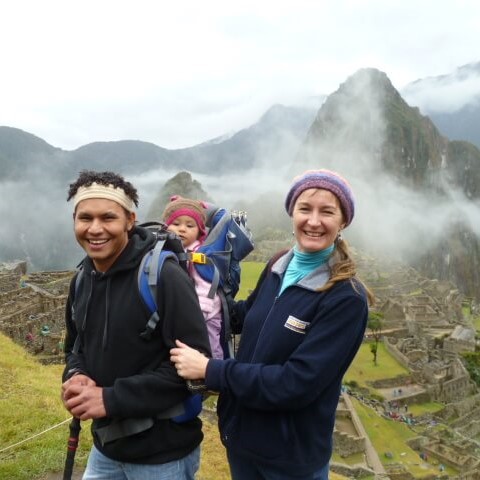
A trip to the Amazon Rainforest is one of the must see places on a Peru family vacation! Flowing across the rainforest is The Amazon River, the second longest on the planet next to River Nile. Read on to learn more amazing Amazon Rainforest facts for kids.
I took my kids to the Amazon jungle in Peru this year, and have recently updated this post with the things that we learnt first hand; more info about our experience in the The Amazon Jungle in Peru.

1. The Amazon Rainforest is the Largest Tropical Rainforest in the World
One of the most interesting facts about the Amazon Basin is that it covers over 6.7 million square kilometres (2.5 million square miles). Of this, 5.5 million square kilometres (2.1 million square miles) consist of a tropical rainforest.
To get an idea of how big the Amazon rainforest is, imagine this. The Amazon rainforest covers about the same area as 48 US states linked together and can fit the United Kingdom and Ireland into it 17 times. The Amazon is larger than the combined size of the planet’s two other largest rainforests – the Congo Basin and the Indonesian tropical areas.
2. The Amazon is Located in South America
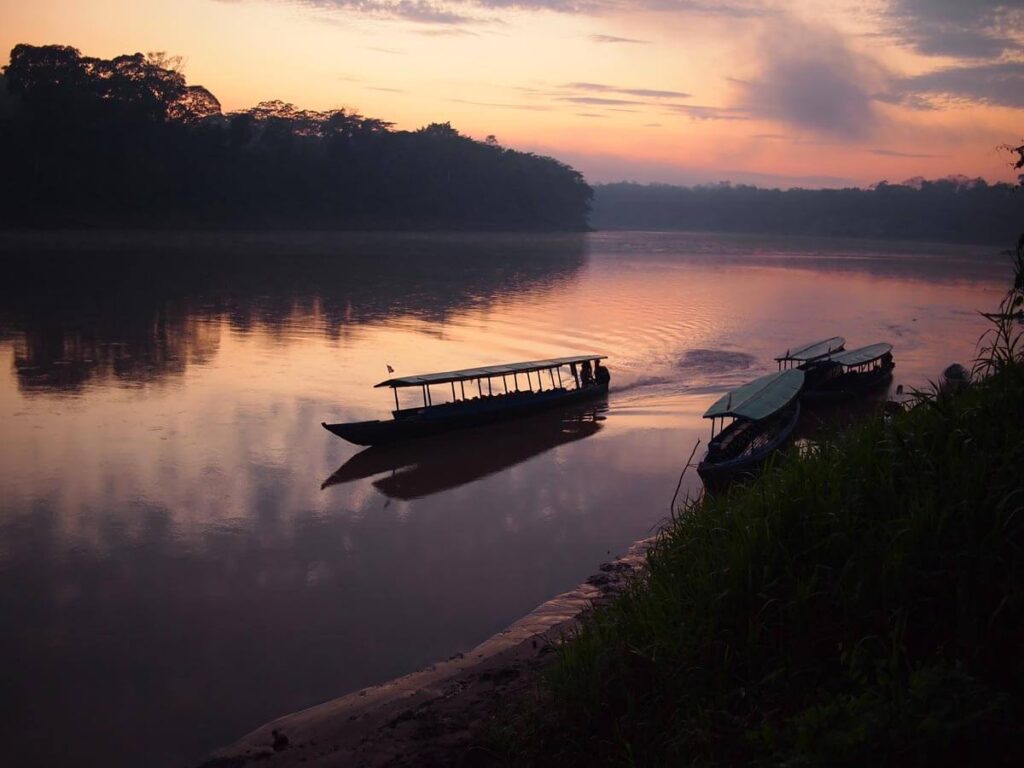
The rainforest spans eight South American countries and one overseas territory, French Guiana. Overall, it covers 40% of the continent. About two-thirds, or 60%, of the rainforest is in Brazil. Peru has 13%, Bolivia 7.7%, Colombia 7.1%, and Venezuela 6.1%. There are also small parts of the Amazon in Guyana (3.1%), Suriname (2.5%), French Guiana (1.4%), and Ecuador (1%).
If you want to discover more about South America, make sure you read our South America Facts.

3. When Was the Amazon Rainforest Created?
This is one of the most remarkable facts about the Amazon Jungle. Some scientists believe it originated during the Eocene era, about 56 million to 33.9 million years ago. During this epoch, the earth’s climate was mainly warm and moist, thanks to plenty of rain. These conditions helped jungles and rainforests to flourish, allowing the Amazon Basin to form.
However, other scientists claim the Amazon Rainforest formed as recently as 2,000 years ago. They say parts of the Amazon may have been grassland until the area shifted naturally to a wetter Amazon Rainforest climate that allowed the rainforest to form.
Scientists found many grass pollens from thousands of years in the residues of nearby lakes. It suggests that the area was once a savannah. Researchers also discovered proof of planting maize, which hints native people likely farmed the land.

4. What is Unique About the Amazon Rainforest?
The Amazon is not only the largest tropical rainforest on the planet but is also home to a whopping number of animal species, insects, birds, and plants, many of which are still unknown by science. Millions of people, including indigenous tribes, also live there. They depend on the Amazon for food, water, medicines, and wood.
The Amazon Rainforest helps even out the climate by storing tons of carbon dioxide. The Amazon Rainforest trees also release tons of water into the atmosphere each day. This process is critical in maintaining the local and global water cycles.
5. How Old is the Amazon Rain Forest?
Just as no one knows exactly how the Amazon Rainforest formed, no one can tell how old it is. Some scientists believe it is 10 million years old, while others say it has existed for at least 55 million years.
6. What Happens if the Amazon is Destroyed?
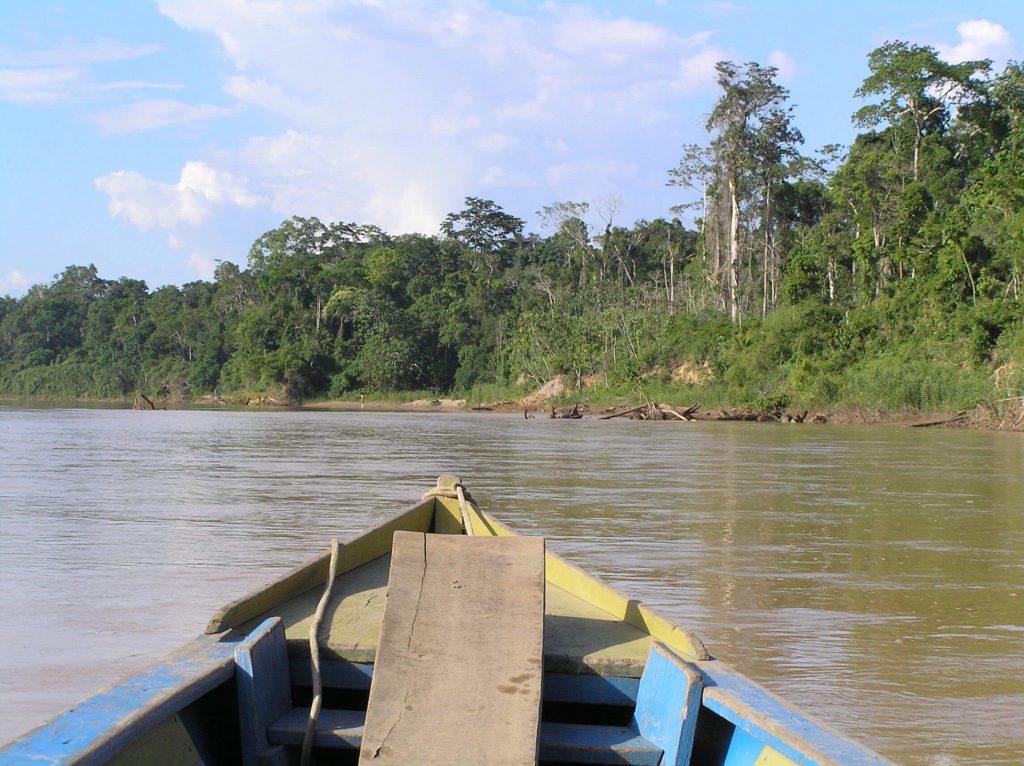
If the Amazon disappears, millions of animals, insects, birds, and plants will lose their natural habitat. These species will die as their ecosystem vanishes, and levels of biodiversity will shrink. Not only that, millions of people living in the area will lose their homes, food sources, and livelihood.
Cutting trees down in the Amazon will upset the water cycle. It can lead to drier weather, droughts, and forest fires. Oddly enough, though there’ll be less annual rainfall, there’ll be more flooding and soil erosion. It is because there will be no trees to absorb extra water and keep the topsoil in place.
Trees filter impurities from human activities. If the Amazon disappears, rivers, lakes, and the land will be full of pollutants. Worse, destroying the Amazon will release millions of tons of carbon dioxide into the atmosphere, affecting air quality and causing global warming.

7. Why is the Amazon Forest So Hot?
The Amazon is near the equator, making it hot and humid with lots of rainfall all year round. The forest’s average temperature is between 23 °C (73°F) to 28°C (83°F) but sometimes peaks at 93°F (34°C) during the dry season.
The Amazon Rainforest has a water cycling system that allows self-watering. Plants give off water vapor into the air through the stomata or pores found in their leaves and stems. The process is called transpiration. Imagine the forest sweating. This moisture creates a thick cloud that hangs over the Amazon, keeping the rainforest hot and humid, like a sauna.
Also, the dense vegetation and trees block any cooling breezes.
8. What Language Do They Speak in the Amazon?
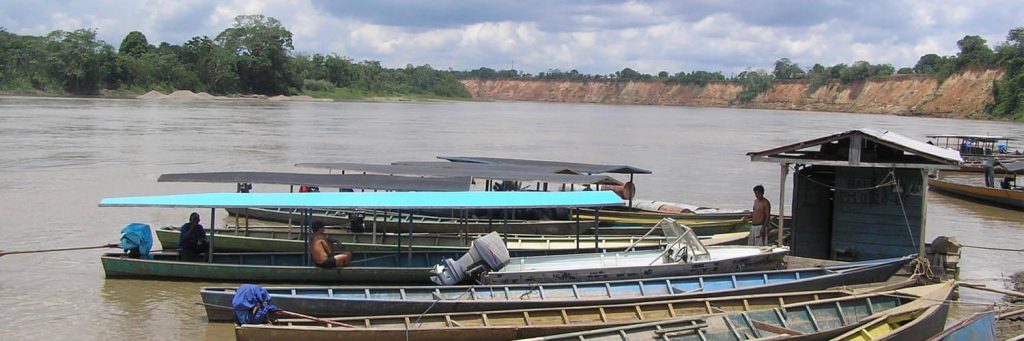
There are around 300 languages spoken in the Amazon. Portuguese is the most commonly used language, followed by Spanish.
Most tribes speak one or both of these languages, plus their native language and sometimes the languages of their neighboring tribes. Some of the most widely-spoken indigenous languages of the Amazon are Arawakan, Cariban, Macro-Je, Panoan, Tuanoan, and Tupian.
9. The Amazon Does Not Produce 20% of the World’s Oxygen
Contrary to popular belief, the Amazon does not produce 20% of the earth’s oxygen. Based on the size of the rainforest, there is not enough carbon dioxide in the atmosphere for the trees to make one-fifth of the world’s oxygen supply.
According to a study by Oxford Ecosystem, the Amazon produces around 6% to 9% oxygen and uses up most of it in the long run.
10. What Can You Smell in the Amazon Rainforest?
When you enter a rainforest, you get a sniff of the mixed odors of soil, moisture, foliage, wood, damp moss, and decaying plants.
It’s earthy, musky, thick, and even stifling, but it’s not an unpleasant scent. It is the smell of nature.


11. Has the Amazon Been Fully Explored?
A great deal of the Amazon remains unexplored because the areas are so remote, full of unknown species, and very hard to get to.
Scientists believe these places shelter undiscovered plants, animals, and other living creatures. Some tribes, many of whom have never been in the outside world, live in these areas.

12. In 2007, A Man Swam The Length of the Amazon River
Taking on one of the most daring adventures in history, Martin Strel, a Slovenian long-distance swimmer, swam the entire length of the Amazon River (the world’s largest river) across much of the Amazon Rainforest region.
His remarkable goal was to cover a staggering 5,268 miles in 66 days, facing intense challenges in the Amazon River Basin like unpredictable currents, piranhas, and other dangerous creatures. Swimming up to ten hours a day, Strel battled exhaustion, unpredictable weather conditions, and even injuries.
Yet, with the support of his dedicated team, he persisted and completed the extraordinary journey, setting a world record.
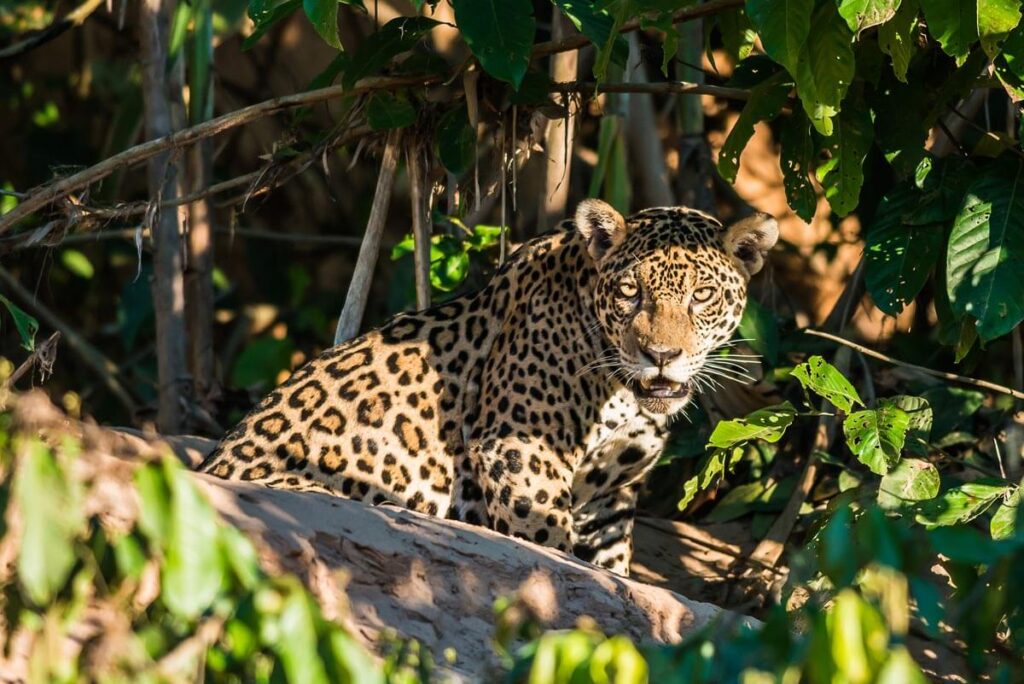
Amazon Rainforest Animals Facts for Kids
From water-walking lizards to pink dolphins and giant venomous snakes, the Amazon is home to thousands of unique and intriguing creatures.
This incredibly rich and unique ecosystem has 3,000 types of fish, 430 mammals, 1,300 bird species, and a staggering 2.5 million various insects. Enjoy these Amazon Rainforest animal facts for kids.

13. 15% of the World’s Bird Species are Found in the Amazon Rainforest
About 1,300 known bird species live in the Amazon. Of this, 28 are native to the rainforest.
Some of the most famous Amazon birds include the Harpy Eagle, Toucan, Hoatzin, Amazonian Parrotlet, and the Iquitos Gnatcatcher, which was discovered only in 2005. The Blue-Throated Macaw, thought to have become extinct in the 80s, was spotted in the Bolivian Amazon in 1992. Now there are around 450 living in the wild.
If you are looking for a bit of Disney inspiration then the movies Rio and Rio 2 loosely share some bright and family fun about blue macaws.
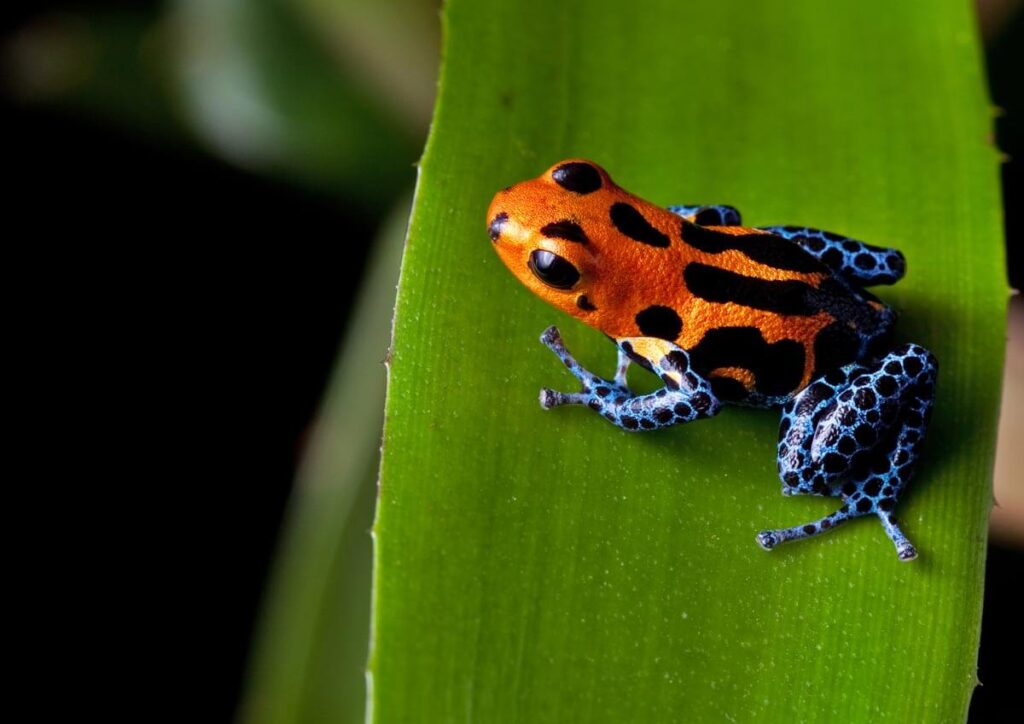
14. The Amazon Rainforest is Home to Poisonous Dart Frogs
Known for their flashy hues, poison dart frogs are native to the rainforests of Central and South America. They come in almost every colour combination, black and gold, orange and blue, silver and green. Their bright shades warn other animals that their skin is poisonous.
Despite their name, not all poison dart frogs are poisonous. Most are toxic but not deadly. Touching them can cause nausea, swelling, and paralysis but does not necessarily kill. However, a few species, such as the golden poison dart frog, are deadly, and the poison in their skin can kill as many as ten grown people. Poisonous dart frogs got their name from the indigenous people who rubbed the tips of their blowgun darts on the frogs’ backs before hunting.
Again, Rio features a poisonous dart frog as the misguided villain, adding a whole new dimension to the Amazon. If you are interested in Amazon facts, then Rio is definitely a fun movie to watch for a bit of Amazon information!


15. What is the Rarest Animal in the Amazon Rainforest?
One of the rarest animals in the Amazon is the Golden Lion Tamarin Monkey. This primate lives in the wild in parts of Rio de Janeiro and is not found anywhere else in the world.
The Golden Lion Tamarin Monkey looks like a lion with its vibrant reddish-orange hair and long mane surrounding its face. On average, it is 10.3 inches tall and 1.37 lbs. It loves clinging to the sides of the tree trunks with its claw-like nails.
With only 2,500 left in the world, the Golden Lion Tamarin Monkey is an endangered specie because of illegal logging, poaching, pet trading, urbanization, and mining.

16. The Amazon River Has Pink Dolphins
Yes, one of the most cool facts about the amazon rainforest for kids is that there are pink dolphins. They live in the Amazon River throughout the Brazilian Amazon region, Bolivia, Ecuador, Guayana, Peru, Venezuela, and Colombia.
These freshwater mammals are considered mythical creatures by local folklore. The males’ skin is a brighter pink compared to the females. It is due to the scars they get from conquests and rough games.
Presently there are over ten thousand pink dolphins. However, their population is dwindling due to water pollution and the building of dams. Poachers also hunt them for their fat which is used as bait to catch catfish.
You May Also Like: Sloth Facts for Kids
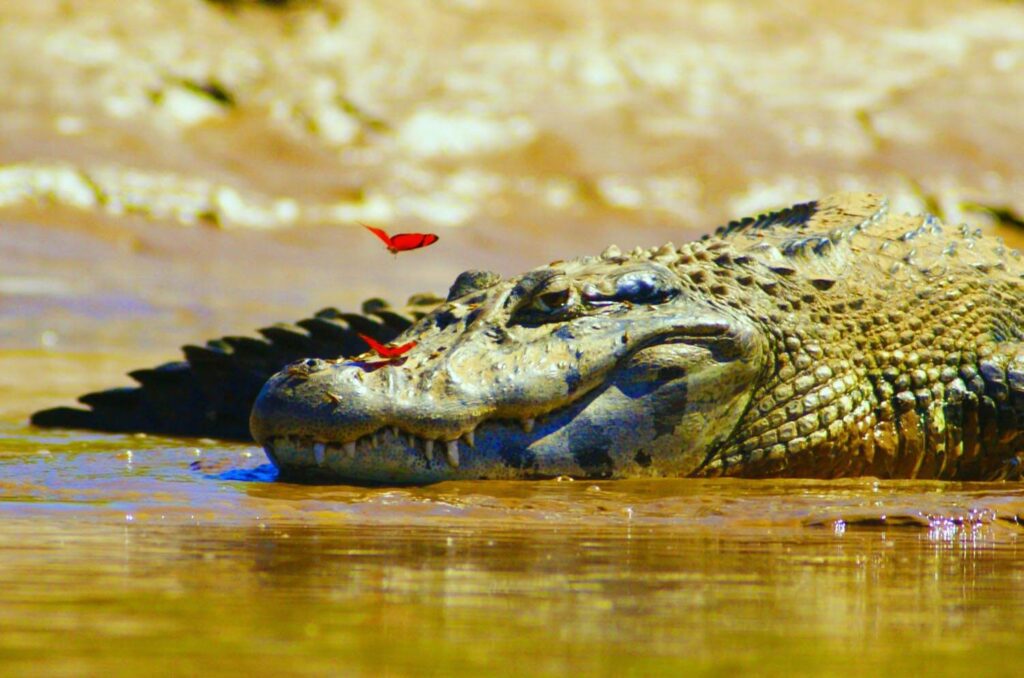
17. The Amazon Has Some of the Deadliest Animals on Earth
Poisonous Dart Frogs are not the only deadly creatures that live in the Amazon. Dozens of dangerous animals call the rainforest their home. Among these are at least 17 venomous snake species, such as Pit Vipers and South American Rattlesnakes. You will also find the fierce Amazonian Jaguar there. In the waters are flesh-eating piranhas, Black Caimans, and Electric Eels that can stun a full-grown human. Massive Green Anacondas hunt in swamps, marshes, and muddy streams.
The Amazon is full of tiny creatures that can be life-threatening despite their size. These include Bullet Ants, wandering spiders, and the venomous Amazonian Centipede. However, nothing is as dangerous as mosquitoes, which carry malaria and yellow fever.

Amazon Rainforest Facts for Children: Amazon Rainforest Plants
The Amazon Rainforest has incredibly rich plant life, from exotic flowers to medicinal herbs to toxic vines used to make poisonous arrows. Remember the trees that provide oxygen, food, and raw materials for non-timber products. Here are more Amazon Rainforest fun facts on plants.
18. The Amazon Rainforest is Home to Over 40,000 Types of Plants
That’s a lot! The Nature Conservancy reports that every 10.3 square kilometres of the rainforest has 1,500 flowering plants and 750 tree species. 75% of the 40,000 plant species are native to the Amazon. Scientists believe there are many more undiscovered plant species in the region.
The forest also has an array of epiphytes or plants that live on other plants. These include orchids, cacti, mosses, ferns, bromeliads, and ropelike vines.
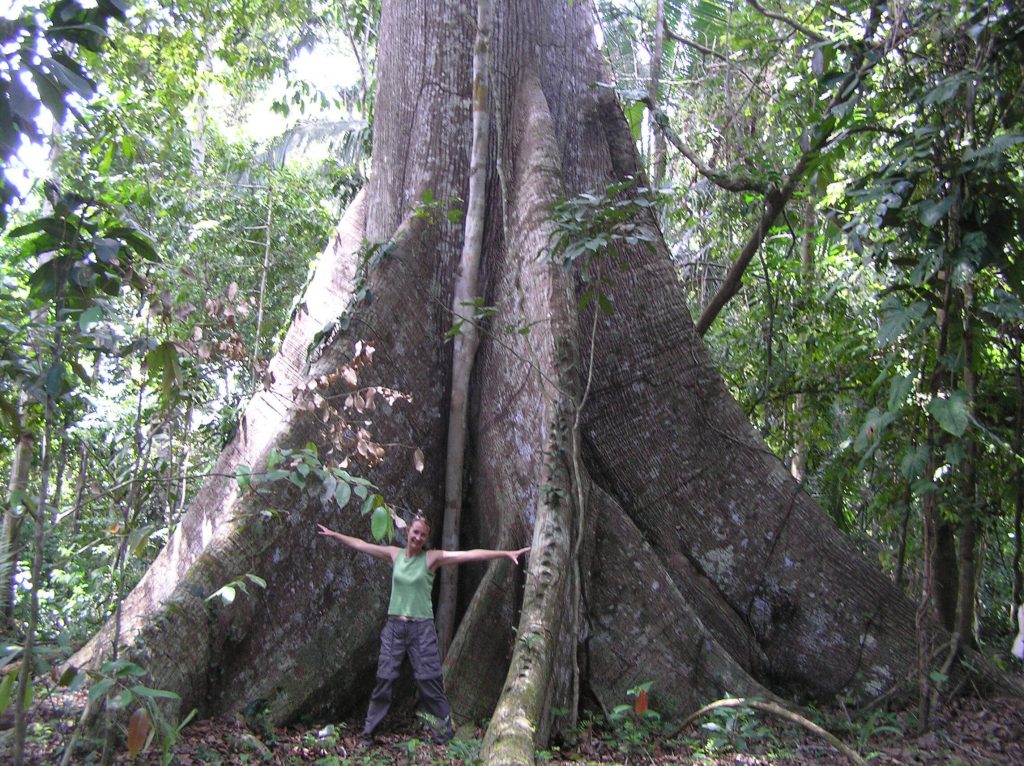
19. How Many Trees Are in the Amazon?
The Amazon contains more than half of the earth’s remaining rainforest. So, it’s not surprising that it has billions of trees; roughly between 390 to 400 billion individual trees, divided into 16,000 species.
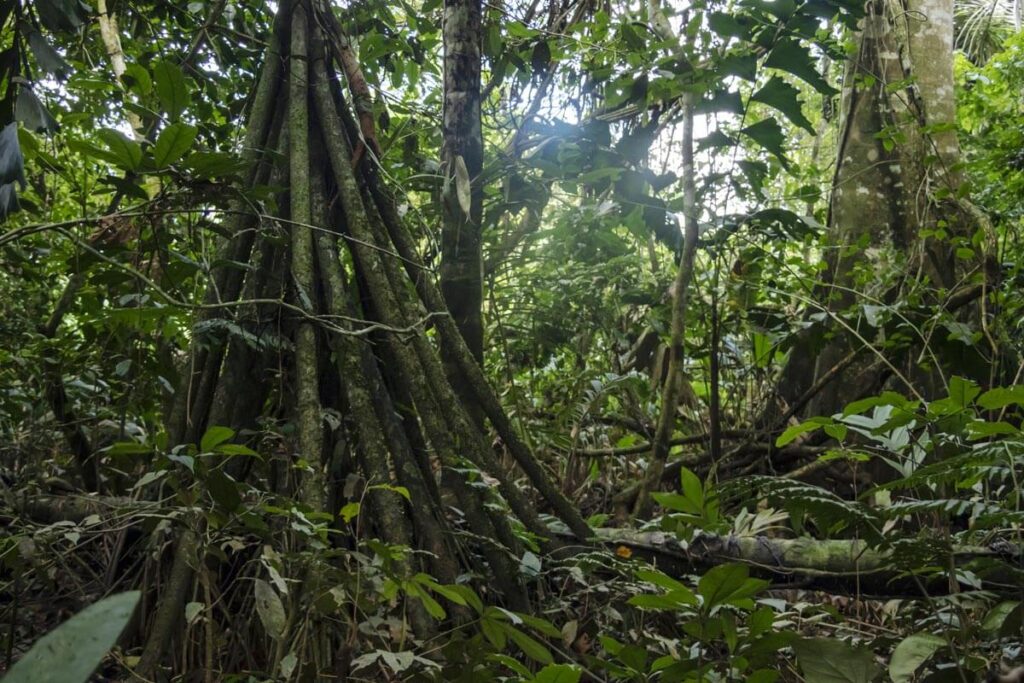
The top branches and leaves of the trees are so dense that only 1% of sunlight can pass, and the forest floor is permanently dark. Because of the thickness of the canopy, it takes almost 10 minutes for the rain to reach the ground.
The most common trees in the rainforest are acacia, rosewood, myrtle, laurel, palm trees, rubber tree, Brazil nuts, mahogany, and cedar. The region also has many exotic fruit-bearing trees, such as camu camu, acai, aguaje, and cocona. These fruits are known as super foods because of their health benefits with the nutrients they provide.
Read More: Peru Food Facts

20. Deforestation is a Huge Problem in the Amazon
Did you know that a portion of the Amazon Rainforest the size of five football pitches is lost every minute? The Amazon is a conserved land, but shockingly deforestation ruined roughly 3,885 square kilometres of the rainforest in the first nine months of 2022 alone.
The top causes of deforestation are cattle ranching, illegal logging, mining, land grabbing, farming, and road construction. Wildfires also contribute to the destruction of the Amazon. Around 1,000 burnings happened in 2022, most of which were in the Brazilian areas. The sad thing is that people are setting fires to clear the land for new soy plantations.
21. What is the Most Important Plant in the Amazon Rainforest?
One of the most well-known plants in the Amazon is the Rubber Tree. Ancient indigenous people discovered rubber hundreds of years ago, but it has been widely used by the west since 1839. South America, including a large part of the Amazon, was the chief source of the product in the 19th century.
The Amazon Rainforest is also home to plants known for their medicinal properties. In fact, 70% of plants used to treat cancer are endemic in the Amazon. Some of the most important medicinal plants in the Amazon are Wasai or Acai Tree for kidney health, Lapacho for treating cancer and easing pain from chemotherapy, and Sodo for curing addictions like alcoholism.
Pusanga de Gallinazo helps relieve anxiety and lowers blood pressure, while Chinchona helps treat malaria, digestive problems, and muscle spasms.

22. How Much Carbon is Stored in the Amazon?
Scientists estimate that up to 200 billion tons of carbon are in the forests and soils of the Amazon. We must preserve the rainforest to prevent letting off this much carbon into the atmosphere. By fighting deforestation, we help fight climate change and global warming.
The trees in the Amazon also have a crucial role in the rainfall cycles of the South American continent as they release a water volume of 20 billion tonnes into the atmosphere daily. It means a tree can produce more than 1,000 litres of water in 24 hours.
Tribes of the Amazon Rainforest Facts
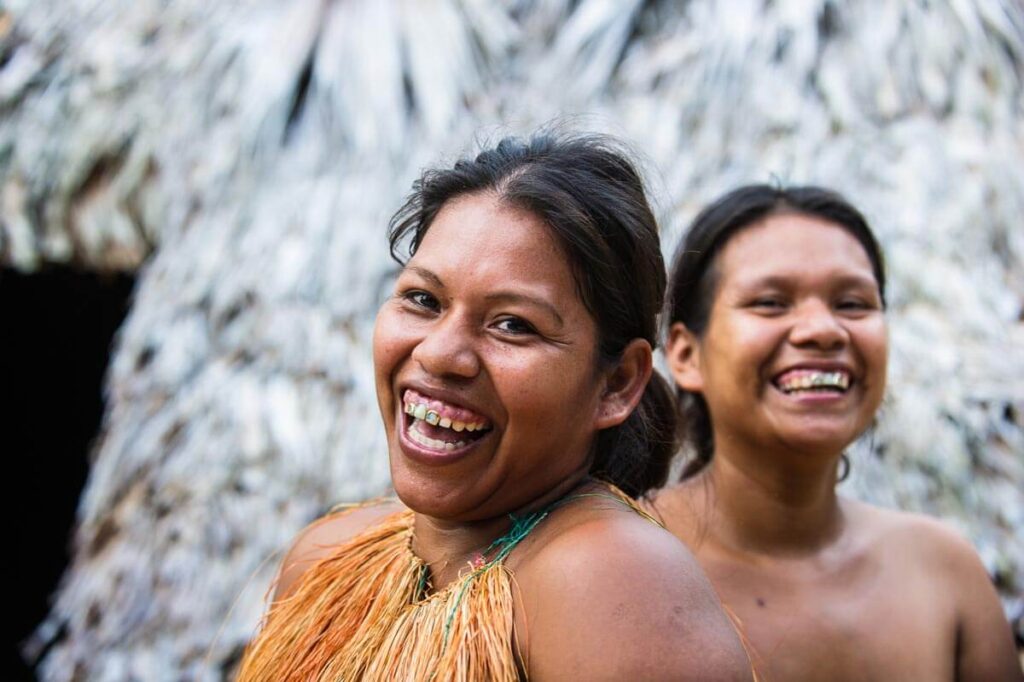
Not only animals and plants live in the Amazon. This wildly beautiful area is also home to 47 million people, including many indigenous groups. It’s estimated by National Geographic that up to 50 Amazon tribes have never had contact with the outside world.
Here are some fun facts on native amazon tribes.
23. Do Tribes Still Live in the Amazon?
Yes, many indigenous tribes still live in the Amazon today. Some of these groups are uncontacted. It means they don’t have continued interaction with the outside world or their neighboring communities. They survive by the rules of nature alone.
Some tribes forage the forest as nomads, while others live in villages along rivers.
24. Who are the Machiguenga?
The Machiguenga are an indigenous tribe native to the high jungles on the slopes of the Andes and the Amazonian jungles of southeastern Peru. Many Machiguengas have had initial contact with outsiders, but a few tribe members still choose voluntary isolation.
Traditionally, they are hunter-gatherers. Today most of them have settled as swidden (slash and burn) farmers growing cassava, maize, cacao, coffee, and bananas.

25. What Do the Tribes in the Amazon Eat?
Native tribes, by tradition, depend on hunting and gathering. Their diet consists of fruits, vegetables, roots, and grains from the forest. Some, however, grow their own crops, such as beans and corn.
They also eat fish, wild pigs, monkeys, snakes, otters, birds, tarantulas, scorpions, grubs, and insects.
26. What Do Amazon Tribes Believe In?
Most Amazon tribes practice a form of animism, wherein they consider nature sacred and divine. They believe every animal, plant, and the inanimate thing has a spirit.
Some spirits can be unfriendly. Shamans try to appease them to maintain peace and harmony in the community.
27. How Many Tribes are in the Amazon Forest?
The Amazon has between 400 to 500 different tribes, consisting of around two million indigenous people. Just as their ancestors have done thousands of years ago, these tribes live on the natural resources they find in the rainforests.

28. How Old are the Tribes in the Amazon?
Anthropologists believe humans settled in the Amazon between 32,000 to 39,000 years ago. But there is no definite way of telling exactly how old the indigenous tribes are.
Still, evidence shows that most tribes, such as the Yanomami and Kayapo, have lived in the rainforest for hundreds of years.
29. What is the Biggest Tribe in the Amazon Rainforest?
The Yanomami, with roughly 35,000 natives, is the largest tribe in the Amazon. They live in some 200 to 250 villages located between the borders of Brazil and Venezuela.


30. Rituals and Spiritual Ceremonies are Common Among the Tribe
The indigenous tribes perform rituals and ceremonies to attain knowledge, increase courage, gain strength, cure illnesses, or enhance hunting skills. These practices have been passed from parents to children for hundreds of years.
One interesting ritual is the bullet ant initiation of the Satere Mawe. To become men, young boys wear gloves full of bullet ants 20 times for ten minutes while dancing.
31. What is the Amazon’s Most Endangered Tribe?
With only 350 members left, of whom 100 have no contact with the outside community, the Awá are the world’s most endangered tribe.
Their population declined mainly due to illegal logging, which destroyed their hunting grounds. Other threats they’re facing are war, modern diseases, drug trafficking, and oil development.

The Verdict – Amazing Facts About the Amazon Rainforest for Kids
There you have it – 31 amazing Amazon rainforest facts for kids. The Amazon is not only one of the world’s most naturally beautiful places. It is also vital to the survival of our planet. I hope these Amazon Rainforest facts for kids helped you appreciate the rainforest more and convinced you why we need to conserve it.
Thinking of visiting the Amazon Rainforest? Why not read our review of Refugio Amazonas or discover our South America Travel Tips? If you’re thinking of visiting Peru, make sure you also read about how to plan an amazing Peru family holiday.
Like It> Pin It> 30 Amazing Facts About the Amazon Rainforest for Kids



Add comment