

Last Updated on December 9, 2023 by Ariana Svenson
As most people know, Australia is home to many unique animals. In fact, there are a total of 11 animals that call Australia home and are found nowhere else in the world! These include animals like the koala, kangaroo, and wombat. And, while Cassowaries are not included in that list, the fact you can find them in Australia is pretty awesome. The cassowary only lives in New Guinea, Aru Islands, and northeastern Australia. The cassowary is a very interesting, and sometimes dangerous, bird. Learn all about them in our fascinating Australian Cassowary facts for kids..
This post may contain affiliate links, from which we would earn a small commission, at no extra cost to you. More info in my disclaimer.

What is a Cassowary?
Cassowaries are large flightless birds found in only 3 places in the world. Their scientific classification kingdom is a genus of birds in the order Casuariiformes. The cassowary belongs to a group of flightless species of birds known as ratites. Other ratites you might be familiar with are the ostrich, emu, and the kiwi.
There are three total types of cassowary species which include the Southern Cassowary, the Northern Cassowary, and the Dwarf Cassowary. The famous biologist John Gould studied this big bird extensively. Gould is considered the father of bird study in Australia. Another biologist, Andrew Mack, has also studied this amazing animal in Papua New Guinea.

The Most Interesting Cassowary Facts
What is a Group of Cassowaries Called?
Ok, we think this is one of the funnier cassowary facts for kids. Would you believe that a group of cassowaries is called “a shock”? Yep, it is true! We searched high and low to find out why, with no luck. Perhaps it is that coming across a group of cassowaries might be frightening and can give you quite a shock. We really aren’t sure. Let us know below in the comments what your best guess is!
Why is the Cassowary Known as the Most Dangerous Bird on Earth?
Cassowaries live deep in tropical forests and are very wary of humans. They are large birds that are fast runners. If they feel threatened or provoked they are capable of causing injury (even fatal injuries) to humans and domestic dogs with their sharp claws and powerful hind legs.
Cassowaries have dagger-like claws on their 3-toed foot that they use to slash predators. And these birds are fast; they have been observed sprinting as fast as 50 km (or 31 mph). So crossing paths with a cassowary who feels threatened by your presence can be scary, and even fatal.
The fact it is often called the most dangerous bird on earth is an interesting fact about cassowary, but what is the reality? The reality is, these types of fatal attacks between a human and a cassowary are rare. The most recent cassowary-inflicted death was of an exotic bird collector in 2019 in Florida. However, fatal cassowary attacks in the wild are rare. Even though they are one of the feared Australian animals, the last one recorded was about 1926. So yes the birds are powerful and dangerous, but the chances of you being attacked by a cassowary in the wild are very low.
Exactly How Big and Tall is the Cassowary?
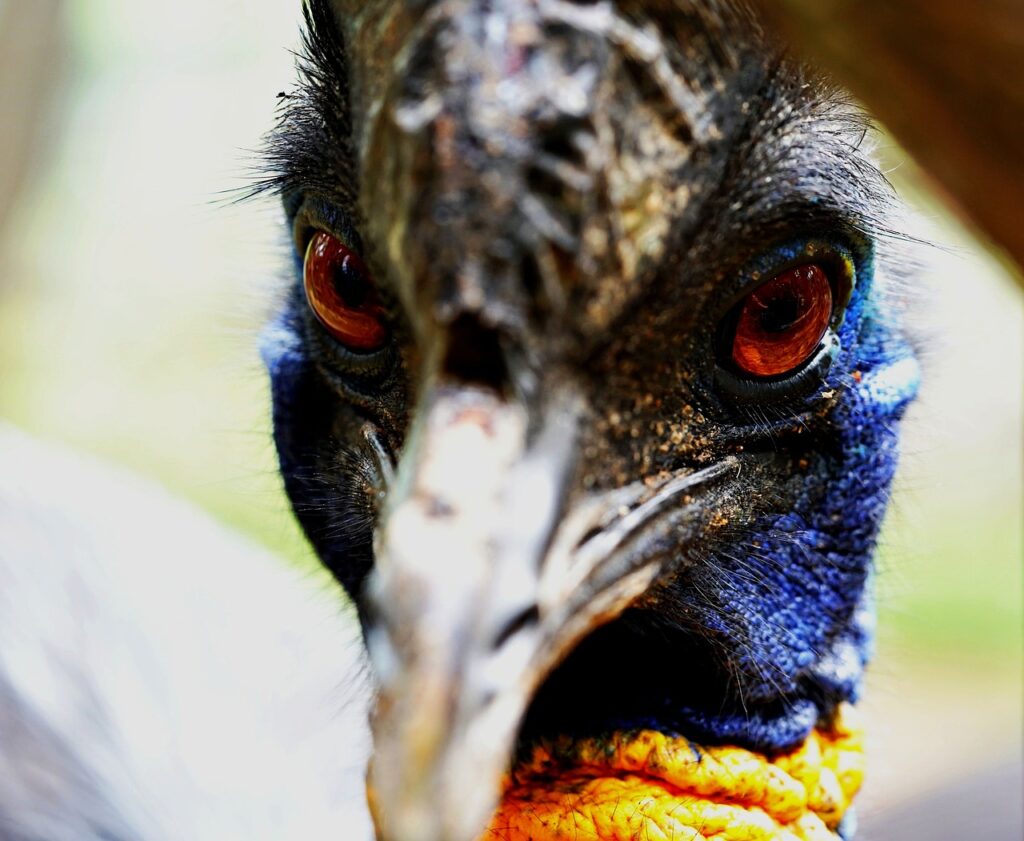
These birds can grow up to 200 pounds and are 6 feet tall! In fact, the cassowary is the second heaviest bird in the world behind the ostrich. It is also the third tallest bird in the world behind the ostrich and emu. That gives you an idea of just how big they can get and why they can be perceived as being so scary. The cassowary has a large body and powerful legs.
Apart from Being Scary, Why is the Cassowary so Very Special?
One of the really cool Cassowary facts is that they are one of the closest living species we have to the dinosaurs. This makes them very special indeed!
How do we know this you might wonder? Well, besides the fact their scary-looking feet with huge dagger-like claws are very dinosaur-Esque, the casque on the top of its head is an indicator. The brown helmet-looking thing on their head is called a casque and no one knows for sure just quite what a cassowary’s casque does. The cassowary’s casque is also said to look like a large horn-like structure.
The official term from the brown thing on the top of the head of a cassowary is called a casque. Casque is the French word for helmet. This makes sense because it definitely does look like a little helmet.
While scientists do not know for sure what the casque actually does, there are some theories. It is theorized that the cassowary uses it for heat exchange, as a way to assert dominance, or possibly as an actual helmet to protect its head as it moves through the dense forest jungles. Either way, these fascinating Australian cassowary facts for kids are really cool.

Baby Cassowary Facts
What is Special about the Cassowary Egg?
They lay eggs that are green! Cassowaries are ground-nesting birds, which means they build their nests on the ground. Because of this, the cassowary green eggs help camouflage it from potential predators by making them blend in with the jungle plants and vegetation. The male cassowary prepares the nests and the females lay between 3 and 8 eggs into each nest built from heaps of leaves.
And these cassowary eggs are big! They are the third largest bird egg behind the ostrich and emu. In New Guinea, people use cassowary eggs as storage or gourds. They also hatch the eggs and eat young cassowaries as a delicacy.

Cassowary Chicks are Raised by the Dads!
Yep, in the wild baby cassowary chicks are raised by the dad. May to November is cassowary mating season and breeding season, otherwise, these giant birds live solitary lives. Once female cassowaries mate and lay the eggs, she heads out, leaving the male cassowary to incubate, hatch, take care of the chicks, and raise the young birds.
The single daddy cassowary has to teach the babies every they need to know to survive on their own. So what is a baby cassowary like you might ask? Well, at first they are helpless. The father cassowary spends 9 whole months with the kids before they strike out on their own.

Interesting Australian Cassowary Facts
As we now know, there are three species of the cassowary. One of the species, the Southern Cassowary lives in Australia.
Where do Cassowaries Live in Australia?
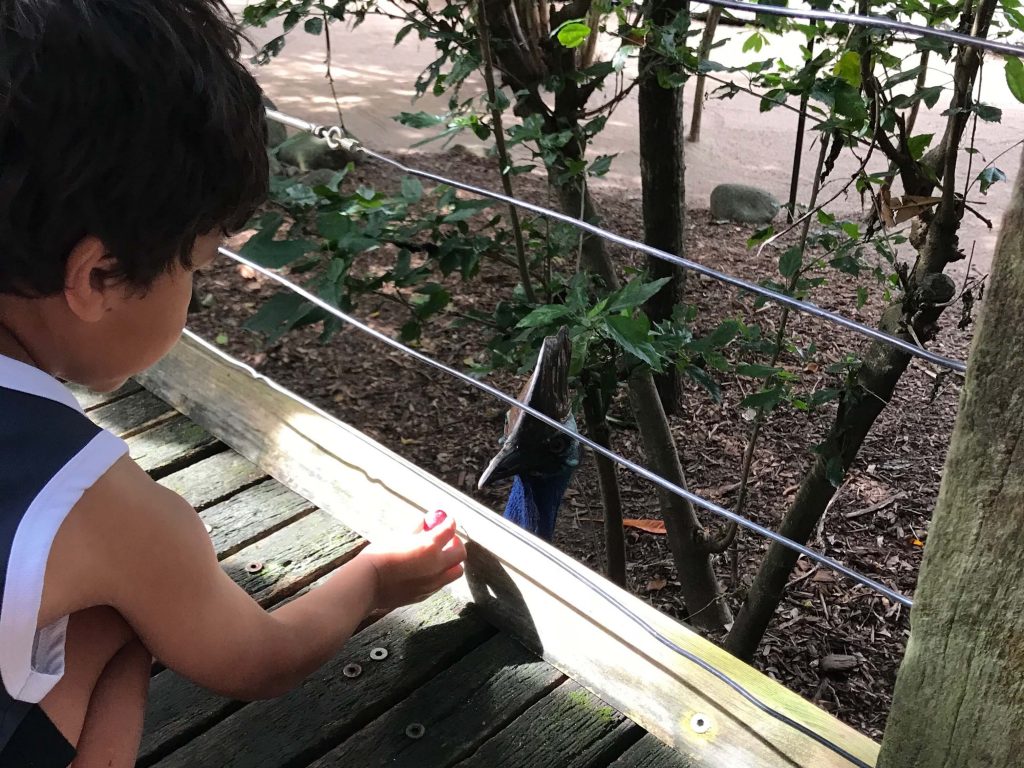
Southern Cassowaries live in a very small, remote dense forest section of far north tropical Queensland. They inhabit tropical rainforests, melaleuca swamps, and mangrove swamps. There are three main places you can find them in north Queensland and one place is the Daintree Rainforest. The Daintree Rainforest cassowary plays a vital role as a rainforest gardener of sorts, dispersing the seeds throughout the rainforests and ensuring the diversity and survival of the flora and fauna of the forests.
Want to learn more about the Daintree Rainforest where the cassowary in Australia lives? Read our 15 AMAZING Daintree Rainforest Facts: Get Ready to be Wowed. And if you’re up for exploring Cape Tribulation, here are our top picks for accommodations in the area, where you’re sure to encounter Cassowaries too!
What does the Cassowary Diet Consist Of?
As we mentioned above, cassowaries are known as the gardeners of rainforests. They have been recorded eating over 238 different species of rainforest plants! Because cassowaries are so large, they are one of the few species that eat the seeds and disperse rainforest fruit seeds. They are often the only long-range dispersal method of making sure these seeds get spread all over the forest.
And by seed dispersal, we mean pooping out on the ground. Yes, the cassowary eats the fruit and plant material as it walks along and poops at the seeds as it goes. Sounds gross, but the cassowary is crucial for making sure these seeds get dispersed and grow throughout. Now you see why the cassowary is referred to as the gardener of the rainforest. So while these cassowary facts for kids might be kind of gross to think about, they are absolutely amazing creatures.

So You Want to See a Cassowary in Australia?
Did reading all these super interesting facts about the cassowary inspire you to want to see one for yourself? Or perhaps you are visiting Queensland Australia where the cassowary lives and need some travel advice and tips. Well, you are in the right place. Basing yourself in and around Cairns or Port Douglas is the most practical point to exploring the Daintree Rainforest and its surrounds. Here are our must-read posts if you will be visiting the area.
Explore Mossman Gorge Walks & Mossman Gorge Swimming Holes
The BEST Cairns Holidays: Our Ultimate Guide To Family Holidays In Cairns
Cairns to Cape Tribulation: Road Trip Along the Great Barrier Reef Drive
17 BEST Cairns Day Trips – Explore Tropical North Queensland
Where To Stay In Cairns With Kids: The 13 BEST Cairns Family Accommodation
Things to do in Cairns with Kids
19 AMAZING Things To Do In Port Douglas | The Best Cairns Holidays


The Verdict – Interesting Cassowary Facts for Kids
We hope you have enjoyed these interesting cassowary facts for kids. Cassowaries are such interesting birds and play a vital role in the health and longevity of the rainforests they inhabit. Besides being known as dangerous, they actually do have much more to their existence that is interesting to learn.
We want to know about your experience. Have you ever seen a cassowary in the wild? How about any cassowary facts for kids you would like to share? Let us know in the comments below.
Check Out Our Other Animals Facts Posts
Interesting Facts For Kids About Koalas
Fascinating Australian Cassowary Facts for Kids
Fun Facts About Alpacas for Kids and Curious Adults
Fun Llama Facts for Kids and Inquisitive Adults
VERY Interesting Sloth Facts For Kids – Learning Made FUN!
Like It> Pin It> Fascinating Australian Cassowary Facts for Kids






If you’re ever in Central Queensland, please come and visit our cassowaries at the Rockhampton Botanical Gardens & Zoo.